
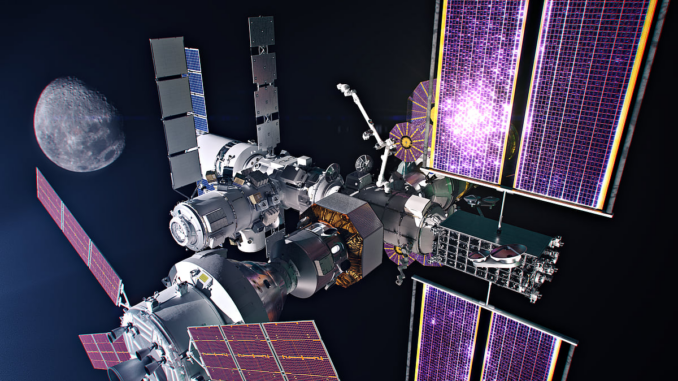
NASA announced this Tuesday, March 24, the immediate cancellation of the orbital station Lunar Gateway to move directly forward with the construction of a permanent base on the surface of the Moonaccording to news provided by Reuters. The North American space agency decided focus all financial and technical resources on accelerating the Project Ignitionwhich foresees the establishment of a fixed human presence on lunar soil by the end of this decade.
NASA Administrator Jared Isaacman justified this strategic decision with the urgent need to simplify exploration logistics and respond to growing international competition, led by China.
This change of direction aims to eliminate the orbital “stopover point” — a kind of way station for traveling astronauts — to focus on what Isaacman describes as the true frontier of space exploration: direct land use.
The investment: 30 billion dollars in the ground
The financial restructuring required for this operation is massive. According to data published by Investing.comNASA plans to invest around $20 billion exclusively in surface infrastructure over the next seven years. Overall, the Programa Ignition expected to require total financing of 30 billion dollars over the next decade to become fully operational.
The resources, which were originally intended for the construction of the Gatewaythrough contracts with Northrop Grumman and other global partners, will now be redirected to the development of habitats modular systems, local resource extraction systems and compact nuclear power plants.
This move entails considerable diplomatic risks, as the orbital project had the active participation of ESA (Europe), Canada and Japan, whose contracts are now in the technical reevaluation phase, as highlighted by the portal The Register.
Artemis: the path to permanence
Program acceleration forced a drastic adjustment to the mission calendar Artemisdetailed by IFLScience. The new plan begins in April 2026 with the mission Artemis IIwhich will take a crew on a test flight around the Moon.
The following year, in 2027, the Artemis III will carry out critical docking and payload transfer tests in Earth orbit, serving as a prelude to the historic moment planned for the beginning of 2028: the mission Artemis IVwhich should mark the definitive return of humans to lunar soil and the beginning of the assembly of the first fixed housing modules.
The ultimate goal is that, in 2030, the base will be able to receive astronauts for long-term stays.
From screen to reality: the legacy of Space: 1999
For sector observers and enthusiasts, this decision by NASA represents a radical change in strategy that evokes the imagination of 1970s science fiction. By abandoning the concept of an orbiting clinical station in favor of terrestrial infrastructure, the agency transforms the legendary Base Lunar Alpha from the series Space: 1999 into a concrete possibility.
Experts consulted by SpaceQ refer that This focus on territorial occupation and resource mining validates the vision of a sustainable lunar economy. Instead of a simple stop on the way to Mars, the Moon is now seen as a new continent to be inhabitedbringing the technological reality of the 21st century closer to the visual audacity that marked fiction five decades ago.
Leave a Reply