
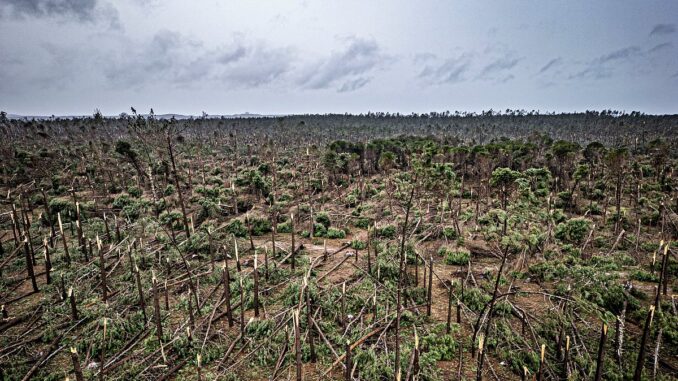
The European Commission approved this Monday, March 30, a 250 million euro package of state aid to the forestry sector in Portugal to reforest affected areas and compensate owners, with subsidies and valid until December 31, 2029.
“The European Commission approved, under European Union rules on state aid, a Portuguese scheme worth 250 million euros to support the forestry sector”, announces the institution in a statement.
According to Brussels, “the scheme will support investments aimed at restoring forests following natural disasters, severe meteorological phenomena or catastrophic events, in accordance with the Strategic Plan of Portugal’s Common Agricultural Policy”.
It also aims to “compensate for the income losses of landowners due to the reforestation of agricultural and non-agricultural soils”, he adds.
Direct subsidies in the form of fixed premiums paid for a maximum period of 20 years are involved, with the aim of encouraging new forestry investments and compensating landowners’ income losses.
According to Brussels, the support includes reforestation premiums for owners of agricultural and non-agricultural land who abandon agricultural activity or commit to maintaining new forest areas, as well as restoration premiums for those who recover forest potential after fires, storms or other extreme situations.
The scheme is co-financed by the European Agricultural Fund for Rural Development for up to 21.9 million euros and is part of the Strategic Plan of Portugal’s Common Agricultural Policy.
The measure will be in force until December 31, 2029.
In the assessment carried out, the community executive says he concluded that the support is “necessary, adequate and proportionate” to stimulate reforestation, also considering that it will have a “limited impact” on competition and trade between Member States.
The approval comes in a context of strong pressure on the Portuguese forest, following the severe storms that hit the country at the end of January and February, with extreme wind, intense rain and flooding causing falling trees, landslides and significant damage to vast rural areas.
Leave a Reply