
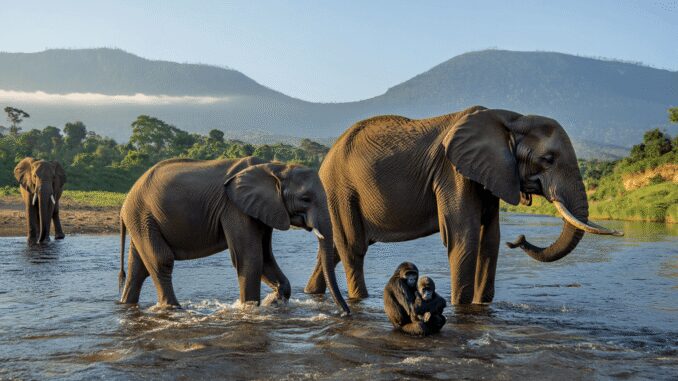
Signs of environmental recovery in the Virunga Mountains: after a reduction in armed violence, hundreds of elephants have crossed again from Uganda and rangers confirm recent births of mountain gorillasincluding some rare twins. These developments point to improved security and concrete effects on the landscape and wildlife that could be consolidated if stability is maintained.
Return of the giants and habitat recovery
In recent seasons, the movement of around 480 individuals from the Ugandan side to the interior of the park has been documented. The return of these animals not only represents an increase in the population, but also triggers ecological processes that only the largest land mammals can provoke.
Due to their size and diet, elephants act as true “engineers” of the environment: they open paths through the undergrowth, control invasive bushes and expand clearings that favor grassland species. Park observers have seen groups of buffalo, Ugandan kob, warthogs and topis reappear; Traces that could belong to lions were even reported.
Anthony Caere, a support pilot in anti-poaching operations, remembers that for years the flyovers almost exclusively showed the presence of armed groups. Today, he says, the image changes: “seeing the herds from the air and noticing how they remodel the terrain is surprising; in a few years the landscape could look again like what it was half a century ago.”
Profits for gorillas and the human effort behind
The stability also benefited the gorilla population. The largest family in the park, known as Bagenhas about 59 individuals and recently made headlines for the birth of twins, a rare event in these primates.
The authorities in charge of monitoring report that, overall, several births have been confirmed since the beginning of the year, and that the mother female is caring for the calves adequately. Jacques Katutu, responsible for gorilla tracking, attributes these increases to the persistence of community trackers who work every day, often in difficult conditions, to detect and protect these births.
What does this mean for the region?
- Ecological recovery: The action of elephants accelerates the regeneration of habitats and favors the diversity of species.
- Socioeconomic impact: The stable presence of fauna favors the potential for ecotourism and productive alternatives for local communities.
- Environmental safety: Less violence and poaching increase the chances of successful reproduction and survival of vulnerable species.
- Persistent risks: the fragility of peace, the need for long-term financing and human pressure on the territory remain threats.
Progress was not born out of nowhere: the park received economic and technical support from international organizations and private funds that have made it possible to reinforce patrols, develop programs to replace illegal activities and improve surveillance. These interventions reduce pressure on wildlife and create incentives for local communities to opt for legal alternatives.
However, experts insist that the consolidation of these improvements requires continuity. If the calm is maintained and protection and development programs are expanded, Virunga could experience a remarkable ecological recovery within a few years; Otherwise, the gains could be reversed with the reactivation of armed groups or the increase in poaching.
In short, the return of hundreds of elephants and confirmed births in the population of mountain gorillas They are positive signs that reflect a fragile but real improvement: fauna responds quickly when violence decreases and conservation actions increase, but the resilience of the park will depend on the continuity of support and regional stability.
Similar items

Alonso Delgado covers the international news with rigor. You’ll find accurate and relevant reporting on major global events, from political crises to diplomatic breakthroughs.
Leave a Reply