
Julia de Paz Solvas (Barcelona, 1995) dropped in two large-scale films that have long been taught by social cinema, which focuses on the problems that characterize the female experience in our days.
En su firsta entrega, Love (2021) told the story of a mother whose responsibility for her daughter was marked by a chaotic personality and economic insecurity, exacerbated by the inability to access any type of family or community support. Now, en La buena hijait addresses the topic of gender violence, but does not focus on the woman who directly suffers the abuse until the end of the day. In both movies too the director manages the style coherently and sparinglyfalling away from realism in documentary cases.
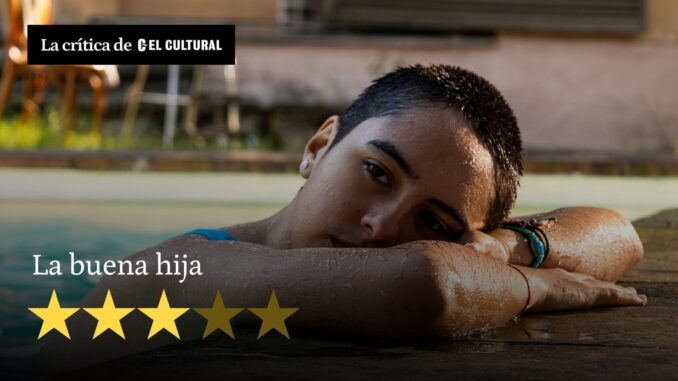
Carmela (Kiara Arancibia) does not turn off the camera during the 100 minutes of recording La buena hijawhich won Best Film, Best Actress and the Audience Award at the Tallinn Festival (Estonia) and which went through the official section of Málaga. She is a 14-year-old girl who experiences the traumatic separation of her parents. Although we never see these things directly on screen, in the setting of the film we are hinted at by the passing on the wall and the presence of the police violent nature desencuentros in a relationship.
Carmela lives with her mother (Janet Novas) in her abuela’s (Petra Martínez) house and regularly attends family meeting workshop, where it is recommended by his father (Julián Villagrán) to spend a long time. He is an attractive man with charm and artistic skills who makes a living by painting, a discipline that also attracts Carmela.
We then understand that she adores him, she may see him as a colleague and contact rather than an authority figure. The complete opposite occurs with the strong relationship he maintains with his mother, Burden set limits for this teenager which leads you to experiment, you are with the first loving escapades or with certain substances.
Between their loyalty to each other, Carmela’s tortured existence is resolved into the most we’ve seen since contemplation of everyday moments which left the dialog below. All this takes on a more dramatic category for a seemingly banal act that Carmela interprets as a punishment from her father to spare her the opposite: more suffering than necessary.
In any case, they are different two scenes that appear on the retinaand this is thanks to the great work of the actors: the moment in the car between Carmela and her father, when Julián Villagrán had previously taken off his volatility, and the final juicio, in which Kiara Arancibia brilliantly takes the stage.
La buena hija
Management: Julia de Paz Solvas.
script: Julia de Paz Solvas, Nuria Dunjo.
interpreters: Kiara Arancibia, Janet Novas, Julián Villagrán, Petra Martínez, Anna Cerveró.
Anus: 2026.
External: April 10th
Leave a Reply