
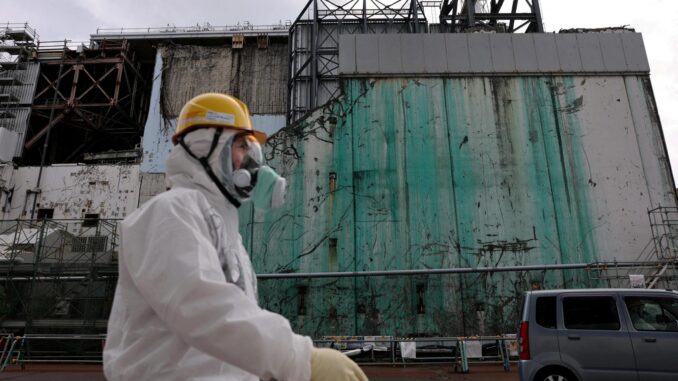
Fifteen years after the earthquake, tsunami and nuclear crisis that shook northeastern Japan on March 11, 2011, Fukushima Prefecture has become one of the largest innovation laboratories energy and technology of the country.
Hydrogen, robotics, renewable energies and research centers are today part of the strategy with which Japan tries to transform one of the major catastrophes of its recent history into a project for the economic and technological future.
However, as reconstruction progresses and infrastructure multiplies, the return of the population continues to be much slower.
First thing in the morning, Namie’s Michi-no-Eki opens its doors like any other rural service area in Japan.
Shops selling local products, a small restaurant and information panels welcome visitors who travel along the prefecture’s coast.
Everything transmits normality.
But you only have to look beyond the parking lot to understand that Namie is not just any town: for more than a decade remained completely empty inside the evacuation zone of the Fukushima Daiichi nuclear power plant.
Operators confiscate material from the Fukushima Daiichi plant.
The story of that void began on March 11, 2011.
At 2:46 p.m., a magnitude 9 earthquake With its epicenter off the coast of Sendai, it triggered one of the largest natural disasters in the country’s recent history.
The earthquake generated a tsunami of more than 15 meters that devastated entire towns, caused nearly 19,000 deaths and triggered a nuclear crisis at the Daiichi plant that forced the evacuation of more than 160,000 people in the following months.
The tsunami not only devastated the coast.
By flooding the nuclear power plant’s emergency generators, it left several reactors without cooling and turned the plant into an unprecedented technological crisis for Japan.
In the following days there were hydrogen explosions and the release of radioactive material into the atmosphere.
What had begun as a natural disaster transformed into a nuclear emergency that forced authorities to make unprecedented decisions in real time.
The evacuation was as quick as it was traumatic.
In an initial radius of 20 kilometers around the planttens of thousands of people were ordered to leave their homes immediately.
In the first year after the accident, more than 160,000 residents were displaced, many without knowing when—or if ever—they would be able to return.
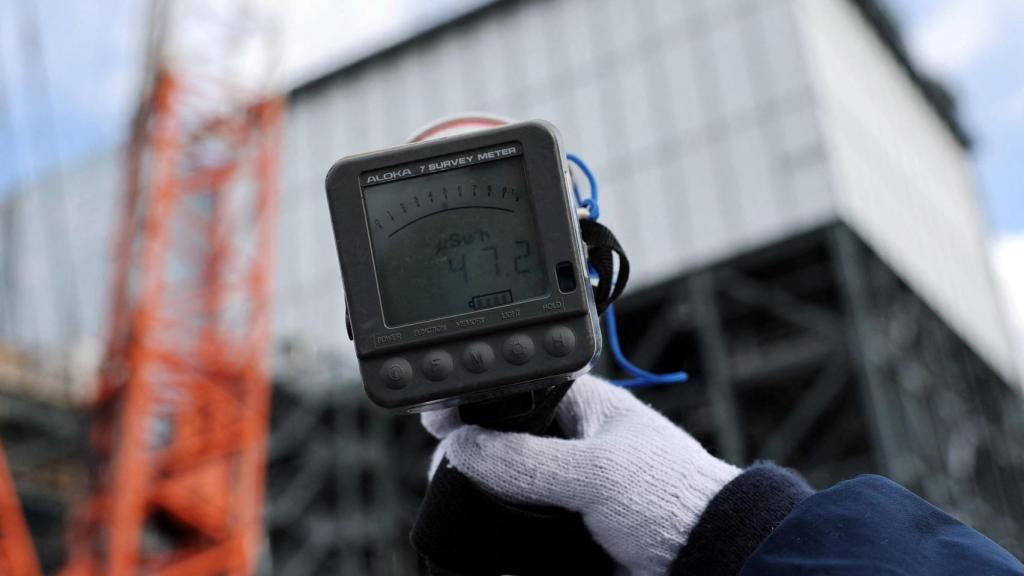
Using a Geiger counter at the Fukushima Daiichi plant.
Entire towns were left empty from one day to the next, with houses, schools and businesses hastily closed, freezing daily life that in some cases has never resumed.
One of the most revealing testimonies of that moment is the Ukedo primary school, in the municipality of Namie.
On March 11, 2011, students and teachers evacuated the building in less than ten minutes after feeling the tremor and seeing the tsunami approaching, following the protocols learned in the drills.
Thanks to that reaction everyone survived.
Today the building remains practically intact and converted into a museum: empty classrooms, stopped clocks and open books remind us of the moment when daily life was abruptly interrupted.
After the evacuation began an unprecedented decontamination process in Japan.
For years, specialized brigades removed layers of contaminated soil, vegetation and debris that were provisionally stored in millions of black sacks spread throughout the Hamadori region.
Added to this physical cleaning was a complex work of radiological measurement, zoning and gradual reopening of areas considered safe, a process that allowed evacuation orders to be progressively lifted although with uneven results in terms of population return.
As time went by, the Japanese government came to the conclusion that reconstruction could not be limited to restoring what was lost.
The strategy became to transform the prefecture into a pole of energy and technological innovation capable of attracting investment, companies and new residents.
That commitment is materialized today in projects such as the Fukushima Research, Education and Innovation Institute (F-REI), created in 2023 to promote research in areas such as robotics, energy, advanced agriculture, radiation sciences and disaster management.
The energy transition has become one of the most visible axes of this transformation.
In the town of Namie, local authorities promote pilot projects to build a hydrogen-based societyintegrating production, storage and use of this clean energy in everyday life.
One of the symbols of this strategy is the Fukushima hydrogen experimental plantone of the largest facilities in the world dedicated to producing hydrogen from renewable energy.
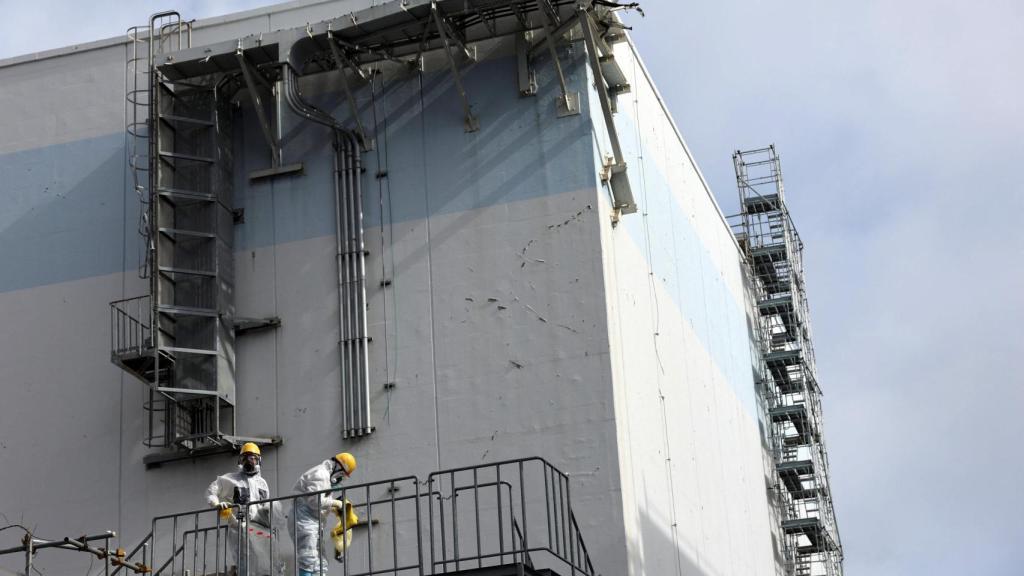
Disassembly operations at the Fukushima Daiichi plant.
But the prefecture’s technological transformation is not limited to the energy sector.
In the city of Minamisōma, the Fukushima Robot Testing Range recreates roads, buildings and disaster zones for testing drones, ground robots and autonomous systems designed for rescue tasks, infrastructure inspection or logistics.
The facility has become one of Japan’s reference centers for the development of technologies applied to emergency management and industrial automation.
Reconstruction also seeks to attract economic activity and new business projects.
In Ōkuma, one of the municipalities that houses part of the nuclear power plant, an incubation center supports startups interested in settling in the region with initiatives linked to energy, sustainability or technological innovation.
The idea is create a new economic fabric capable of offering qualified employment and giving reasons to live and work in an area that for years was synonymous with evacuation and pollution.
Along with these future projects, the memory of the disaster is still very present.
The Great East Japan Earthquake and Nuclear Disaster Memorial Museum, located on the coast, documents the events of March 11, 2011 and their social and political consequences.
Its objective is to preserve the memory of the catastrophe while the region tries to rebuild its identity between technological innovation and the scars still left by the evacuation.
Fifteen years after the disaster, Fukushima is today a territory in tension between innovation and absence.
The infrastructures are rebuilt, the research centers are advancing and the official discourse speaks of revitalization.
However, the return of the population remains limited. In some municipalities in the Sōsō region, the return is barely enough a fifth of the residents who lived there before 2011which makes it difficult to recover a stable community life.
Japanese authorities maintain that the recovery cannot be measured solely in immediate return figures.
The strategy consists of laying the foundations for a new economic model based on research, energy and advanced technology, capable of attracting investment and qualified employment in the long term.
But the challenge is not just economic: returning to Fukushima remains, for many former residents, a deeply personal decision marked by the memory of the accident.
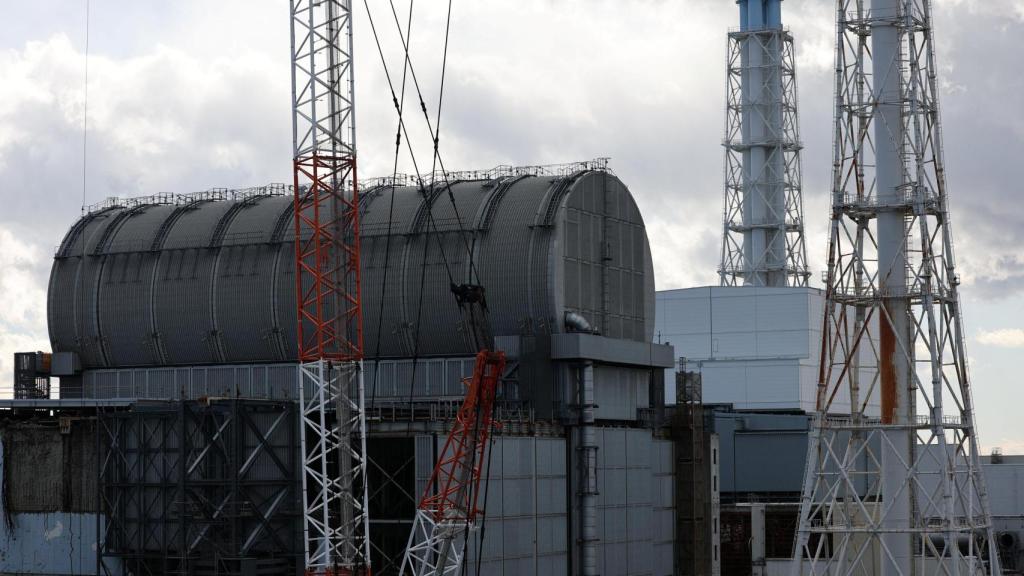
Reactors 3 and 4 of the Fukushima Daiichi nuclear power plant.
That contrast is clearly perceived in places like Namie.
The Michi-no-Eki that today receives visitors, sells local products and presents future projects is built in a municipality that for years remained completely empty.
Fukushima It advances, but it does so at two speeds: that of infrastructure and technology, and the much slower speed of the return of daily life.
Rebuilding roads, research centers or hydrogen plants has been possible in a few years; Rebuilding the trust needed to return home is proving much more difficult.
Leave a Reply