
Reducing fuel and gas consumption “as much as possible” is the immediate solution recommended by the European Commission to face the energy crisis that results from more than a month of war in the Persian Gulf with a sharp rise in prices.
The proposal was communicated by the European Energy Commissioner, Dan Jorgensen, this Tuesday, after an emergency meeting of EU Energy Ministers, in a press conference in which he admitted that the consequences of this crisis could be prolonged.
“We cannot have the illusion that the consequences will be temporary, because they will not.” And, he recalled, “even if the war ended tomorrow, the destruction of production infrastructure will always prolong the disturbance”. Despite this, Brussels continues to defend that security of supply is guaranteed.
The call for savings _ which is also shared by the Portuguese Minister for the Environment and Energy _, is aimed particularly at transport and aviation, because there is a high dependence on jet fuel (which planes consume) from the Gulf region. Therefore, driving less and flying less are now the watchwords.
According to the person responsible for Energy, the European Commission “should very soon release a package of measures and guidelines for Member States”, which should include the call for the use of public transport or shared cars and recommendations for countries, depending on their circumstances, to reduce “as much as possible” the demand for fuel.
“At the same time, increased use of biofuels could help replace fossil petroleum products and alleviate pressure on the market”, suggested Dan Jorgensen, as the Association of Bioenergy Products Producers (APPB) has also defended, as DN reported this Monday, 30.
In Europe, gas prices have risen on average by 17% for gas and 16% for oil since the start of the war in Iran, explained Dan Jorgensen.
But asked whether the guidelines would include a sharper reduction in fuel taxes, similar to what happened in Spain, the commissioner refused to defend it. “I understand that countries have different circumstances”, but “when countries apply measures they have to take into account measures that reduce demand”, he said. The high price is also a factor in involuntarily reducing demand.
Portugal is better in savings and renewables
Also this Tuesday, the Minister of State and Finance, Joaquim Miranda Sarmento assured that Rising energy prices are not translating into additional tax revenuearguing that the revenue collected from ICMS is being deducted from the value of the Tax on Petroleum and Energy Products (ISP).“In fuel, the State is not making money”, assured the minister during the hearing at the Budget, Finance and Public Administration Committee.
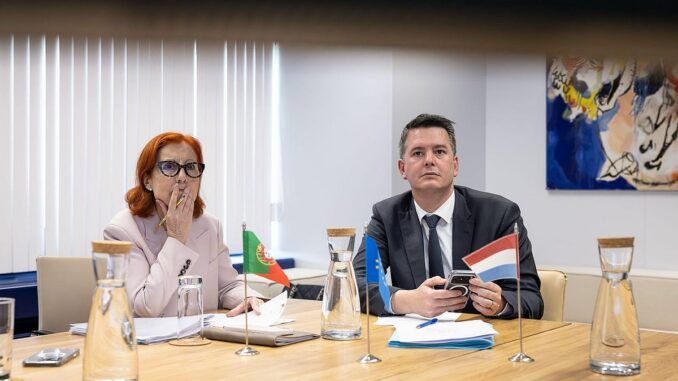
Before the meeting of Energy ministers, which she participated in via videoconference, minister Maria da Graça Carvalho also defended the importance of placing emphasis on the economy and said that she would propose to her peers to coordinate efforts in this regard. THE government official highlighted that Portugal “is better than other countries” in terms of energy savings. “We have done a lot. We are better than other countries, in terms of renewables, energy savings, electrification of homes and transport”, he argued.
“If the price is expensive and there may be a supply problem, what we have to do is save money, without creating alarmism, without harming the economy”, he defended.
Leave a Reply