
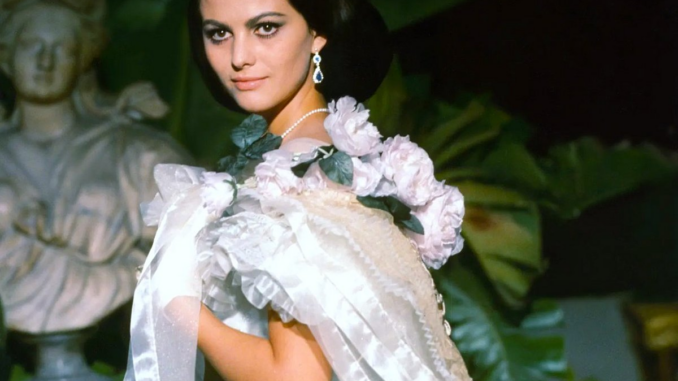
Unlike other great actresses revealed at the same time, Claudia Cardinale’s image was never linked to a “dominant” author (as happened, for example, with Monica Vitti and Michelangelo Antonioni), even if it is a fact that she was directed by Visconti in an admirable trilogy (Rocco and His Brothers, The Leopard e Sandra). At the same time, along with some other emblematic names in European cinema (Catherine Deneuve, in France, could serve as an example), never consolidated a real career in Hollywood, although his name appeared in the cast of several titles made in USA. His drift through cinematographic universes full of thematic and narrative contrasts can also be illustrated through his participation in Gebo and the Shadow (2012), Manoel de Oliveira’s final feature film.
Five films to (re)discover
Although Claudia Cardinale’s name is a universal reference for cinephilia, some of her films have not always received the publicity, or even the critical attention, that they deserve. Here is a quintet of hypotheses to review, or discover, in the Cinemateca cycle.
THE BUBE GIRL (1963)
From 1962 onwards, Claudia Cardinale’s career took on a truly glorious dimension, successively filming Eight and a Half, The Leopard, The Pink Panther (inaugural title of Blake Edwards’ comic saga, with Peter Sellers) and La Ragazza di Bube. Centered on the return from the war of Bube, a “partisan” from Tuscany, the film has the dramatic intensity typical of the style of Luigi Comencini, an “artisanal” filmmaker whose rediscovery is yet to be made. In the role of Bube, George Chakiris appears, who two years earlier had been one of the protagonists of West Side Story.
Leave a Reply