
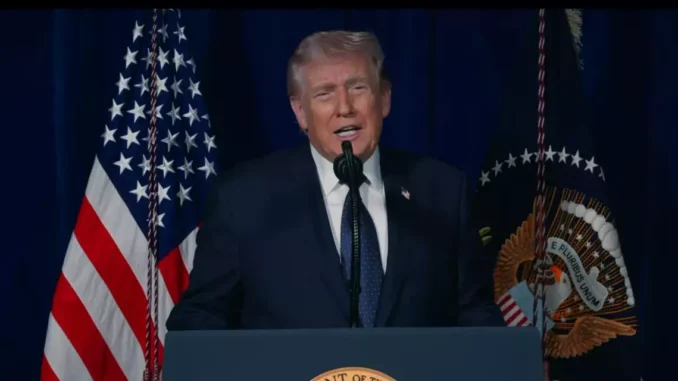
In a move that shakes international markets, the President of the United States, Donald Trump, signed a series of decrees this Thursday that impose new tariffs on the import of pharmaceutical products and reconfigure current taxes on metals.
This measure comes exactly one year after the announcement of its global tariffs, reinforcing its “America First” policy and seeking a deep transformation in the US supply chain.
TARIFFS ON MEDICINES: THE PLAN TO REPATRIATE PHARMACEUTICALS
The most disruptive decree is the surcharge on imported pharmaceutical products. The central objective of the White House is to accelerate the return of production plants to US soil, reducing dependence on foreign manufacturing in the health sector.
HOW WILL THESE TAXES WORK?
- General Rate: It could reach up to 100% for countries without specific treaties.
- Preferential Rate: It will be 15% for strategic allies that have current trade agreements with Washington, including the European Union, Japan and South Korea.
This measure aims to strengthen national security through self-sufficiency in the production of critical medicines.
ADJUSTMENTS IN METAL TARIFFS: WAR AGAINST PRICE MANIPULATION
In addition to the pharmaceutical offensive, the Trump administration announced a major review of tariffs on metals. According to the White House, this reconfiguration seeks to stop unfair practices by foreign companies.
The White House’s reason: The administration detected that various companies are trying to “artificially manipulate” the prices of their production to resell it cheaper in the US market, a practice known as dumping which directly affects the local metallurgical industry.
IMPACT ON GLOBAL TRADE
The announcement has generated immediate reactions in stock markets and among US trading partners. Experts suggest that these decrees could:
- Increase the costs of certain short-term medications in the United States.
- Pressure global pharmaceutical companies to move their operations to US territory.
- Stress trade relations with powers that do not enjoy the 15% preferential rate.
With these signatures, Donald Trump reaffirms his intention to use tariffs as a negotiation tool and engine for the reindustrialization of the country.
Leave a Reply