
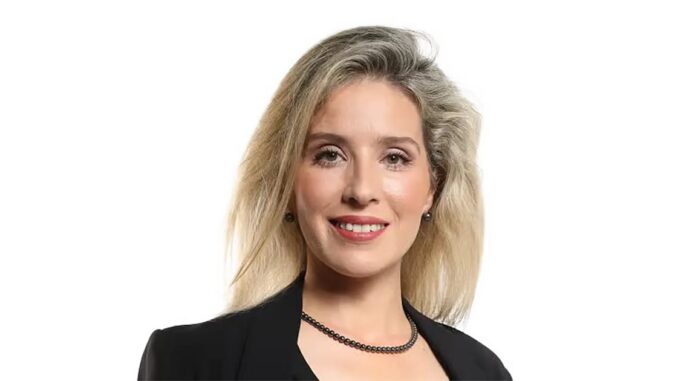
The controversy that is currently roiling Brazil and which even involved a famous Brazilian television presenter far surpasses the figure of congresswoman Erika Hilton. Born Felipe Santos Silva, registered Erika Santos Silva when he identified with the female gender and decided to claim to be transsexual, it is with the political name Erika Hilton that he has done his parliamentary work. But what is at stake is a deeper question: who represents women politically?
Hilton’s election to chair the Committee for the Defense of Women’s Rights in the Chamber of Deputies was celebrated by some as a step forward for inclusion. But for many women it provoked discomfort and indignation. Not because of personal animosity, but because women know, from their history and experience, that their struggles were born from a concrete reality: biological sex.
Over the centuries, women have had to achieve basic rights precisely because they were born women. They were excluded from education, politics, the arts, economic autonomy and continue to face inequalities and violence that have, as a clear basis, the difference between the sexes.
From a biological point of view, human sex is determined by chromosomes. Individuals with XX chromosomes develop as females; individuals with XY chromosomes develop as males. No surgery or hormonal treatment alters this genetic reality present in every cell of our body.
There are fundamentally three cases in which there are exceptions: with Klinefelter Syndrome, Turner Syndrome and Androgen Insensitivity Syndrome (AIS). According to the World Health Organization, the National Institutes of Health/Genetic and Rare Diseases Information Center, Orphanet and the Centers for Disease Control and Prevention, these syndromes affect, respectively, 0.1 to 0.2% of men, 0.04% of women, and 0.001-0.005% of people. Recognizing this scientific fact should not be considered offensive. It is simply recognizing the material basis on which women’s historic struggle was built.
When women say they want to be represented by those who share their biological reality, they are often accused of discrimination. However, many feel that what is happening is precisely the opposite: a new form of silencing. A new kind of machismo.
The contemporary debate on gender has placed two realities in tension: individual identity and the political category of women. Ignoring any of them impoverishes the debate. But demanding that women renounce the biological definition of their own condition to avoid controversy is absurd.
Women have fought for generations to have their voices heard. It is unreasonable that, at the moment they seek to defend the meaning of this struggle, they are asked to remain silent. Much less accept, without a fight, that Monthy Python’s Loretta takes her place.
Write without applying the new Spelling Agreement
Leave a Reply