
The evolution of gas prices in the coming months will mainly depend on the duration of the current geopolitical crisis, and the impact on families and companies could become more significant if the scenario continues, warned the executive president of Floene.
“The exposure of the economy to these geopolitical effects is very large and, therefore, it is unavoidable […] ends up having a greater impact on families and companies”, Gabriel Sousa said in an interview with Lusa.
Even so, the executive emphasizes that the current context is far from the shock experienced in 2022, when gas prices reached around 300 euros per megawatt-hour, compared to current levels “slightly above 60 euros”.
Despite the uncertainty, he considers that Europe is now better prepared to respond to a new energy crisis. “The European space […] is better prepared than it was in 2022”, he said, pointing to the mechanisms created in the meantime to mitigate market shocks.
Among these responses are European instruments that allow gas prices to be limited in extreme situations, measures that the company sees “positively”, although it emphasizes that these are short-term solutions.
For Floene’s executive president, the main response should be structural. “The countries […] they have to do something to reduce their dependence”, he stated, defending an increase in energy production within Europe.
In this context, he highlighted the role of renewable gases, namely biomethane, whose European target points to 35 billion cubic meters by 2030, as a way of reducing exposure to external crises.
“One of the most long-term solutions is actually […] reduce imports”, he highlighted.
The energy crisis of recent years, he added, should also be seen as a catalyst to accelerate this transformation. “These events […] they have exactly this opportunity effect”, he concluded.
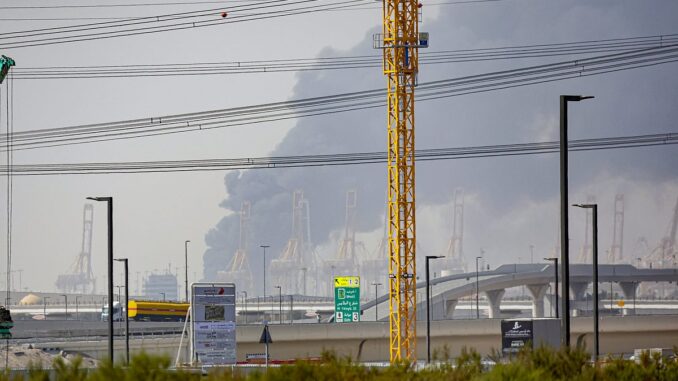
The rise in energy prices reflects the worsening of the situation in the Middle East following the attack by Israel and the United States on Iran and the closure of the Strait of Hormuz, through which around 20% of global oil production and almost 20% of liquefied natural gas (LNG) passes.
Leave a Reply