
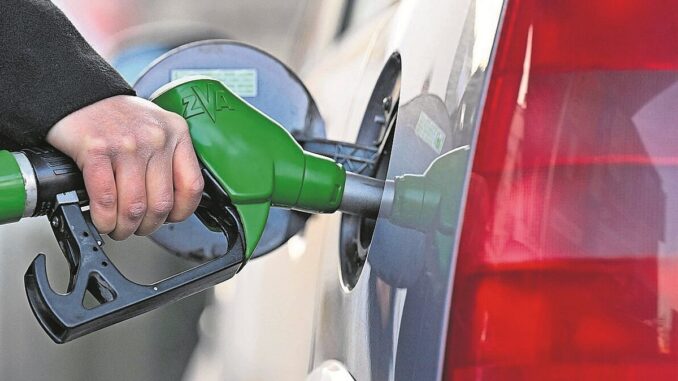
The Lower House of the German Parliament (Bundestag) approved this Thursday, 26th, measures to address the increase in the cost of fuel due to the war in Iran, including a ban on increasing the price of fuel more than once a day.
The measures proposed by the government coalition formed by German conservatives and social democrats provide for fines of up to 100,000 euros if limitations on increases in fuel prices are not respected.
The fuels affected by this initiative, known as “the Austrian model”, are diesel and E5 and E10 gasoline.
Among the measures approved there is also a tightening of anti-monopoly legislation, as it makes it easier for the Federal Competition Office to intervene against companies in the sector in a dominant position.
Furthermore, in the event of sharp price increases, companies will have to demonstrate that their increases are objectively justified.
“Now the energy groups will have to prove why they increase prices and show what the price structure is like,” said German Economy Minister Katharina Reiche in a press statement after the vote in the German Lower House.
“Now it will be possible more quickly for the Federal Competition Office to act and investigate infractions”, highlighted the minister.
“We not only take citizens’ concerns into account, but we also act. But it could also be that this package, if the crisis persists in the region, is not enough,” warned Reiche, who thus alluded to the economic consequences of the war in the Middle East.
According to the minister, the German Government is open to taking other measures, such as increasing tax deductions on travel expenses or reducing taxes on energy.
Regarding the reduction of taxes on energy, “it is necessary to see if there is room for maneuver in the budget”, added Reiche, who assured that the Government also continues to prioritize maintaining stable gas and oil supplies.
“There is no shortage in the oil and gas markets”, recalled the minister.
The measures approved in the Lower House, which still need approval from the Upper House – the parliamentary body that will vote on the package on Friday – respond to the increase in energy products as a result of the war in Iran, a conflict in which naval traffic in the Strait of Hormuz was affected.
The Strait of Hormuz is one of the key points in the trade of hydrocarbons, especially those going to Asia.
Leave a Reply