
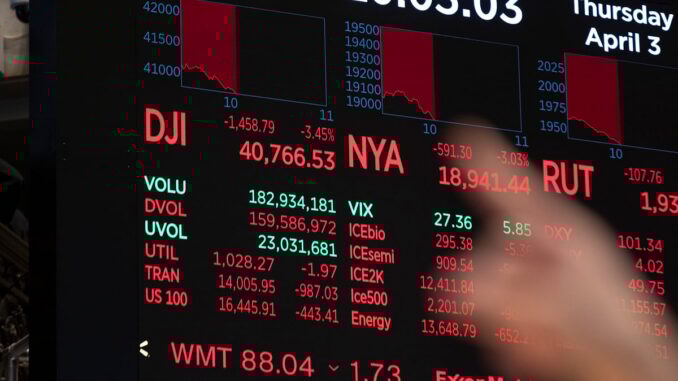
In March, financial markets canceled the gains recorded in the previous two months. As a result of the war, the global market lost 3.9% since the beginning of the year, but the losses were more pronounced on the most sought after exchange in the world.
According to an analysis by Maxyield, the MSCI World (measures the global market) fell 3.9% in total in the first three months of the year. The origin is the 6.6% drop recorded exclusively in March.
Among other stock indices that are among the most important on an international scale, in Europe, the Stoxx 600 fell 8.0% in March and 1.5% since the close of the last session of 2025.
Os European benchmarks registered declines in these three months, with two exceptions. The British FTSE 100 fell 6.7% in March but rose 2.5% in the first quarter of the year e the PSI index, with a drop of 1.6% in March, achieved a quarterly gain of 10.5%. Even though the negative sentiment in March is transversal, a direct result of the war in the Middle East, Lisbon and London recorded gains in total in the first three months of the year.
Em Wall Street, the S&P 500 fell 5.1%which leads to a 4.6% loss in the benchmark index in the first three months of the year. At the same time, the Nasdaq technology index fell 4.8% in March and 7.1% since January 1st.
Looking at asian marketsthe Hang Seng (Hong Kong) fell 6.9% in March and 3.3% in the three months of 2026, while the Australian S&P ASX 200 lost 7.8% in March and 2.7% since the beginning of the year. On the other hand, the Japanese TOPIX, which trades the shares of major Japanese domestic companies, fell 11.2% in March but gained 2.7% this year, while the South Korean KOSPI fell 19.1% last month but still rose 19.9% compared to last year’s close.
The month of March was marked by great volatility and, mainly, significant falls in the stock markets. The beginning of April is marked for now by some recovery, as a result of signs that the war may be close to a ceasefire.
Leave a Reply