
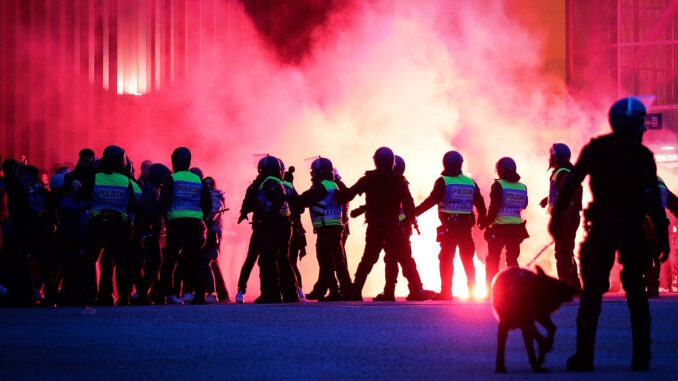
According to the person responsible, the episodes associated with incentives for violence, racism or xenophobia recorded a declinegoing from 30 to 21 occurrences. Despite the global decrease, Gonçalo Pereira emphasizes that the phenomenon of violence in sport has not disappeared, but is instead undergoing transformations that require greater attention from the authorities.
One of the factors that concerns the PSP is the growth of freak “casual”, trend already identified in several European countries. These organized groups of fans are characterized by not presenting themselves as traditional cheerleaders and by adopting strategies that make police identification difficult. They often dress similarly, often in black, and they favor physical confrontations to the detriment of organized support for teams.
For the PNID coordinator, this is a growing movement that requires constant monitoring. “The focus of these groups is violence and not support for the club,” he says, warning of the need to strengthen prevention and surveillance mechanisms.
As of February 22, 437 fans were registered in Portugal banned from attending sports venues, number that results from court decisions and the actions of the Authority for Preventing and Combating Violence in Sports (APCVD). Authorities consider this measure an important tool, although not sufficient to combat the phenomenon.
With the 2030 Football World Cup on the horizon, Portugal has been reinforcing international cooperation and the training of specialized agents known as “spotters”.These PSP elements work mainly on collecting information and mediating with fans, seeking to anticipate risk situations.
Despite the statistical reduction in incidents, authorities warn of a new reality: violence associated with sport is becoming more dispersed and less predictable. According to data collected by the PSPepisodes of confrontation between fans also begin to appear in sports and competitions with less police presence, such as futsal, roller hockey or handball.
One of the most recent cases occurred on February 19th near the Pavilhão João Rocha, in Lisbon, before a Futsal League meeting. More than a hundred fans were involved in clashes and used pyrotechnic devices, in an incident that resulted in 124 arrests.
At the heart of the PSP prevention strategy is Metropolitan Sports Information Unit (UMID), created two decades ago, in preparation for Euro 2004. The unit works mainly on collecting and analyzing information about organized groups of fans and potential sources of conflict.
This phenomenon often involves socially integrated young people, including university students and middle-class professionals, who organize themselves for pre-arranged confrontations.
Leave a Reply