
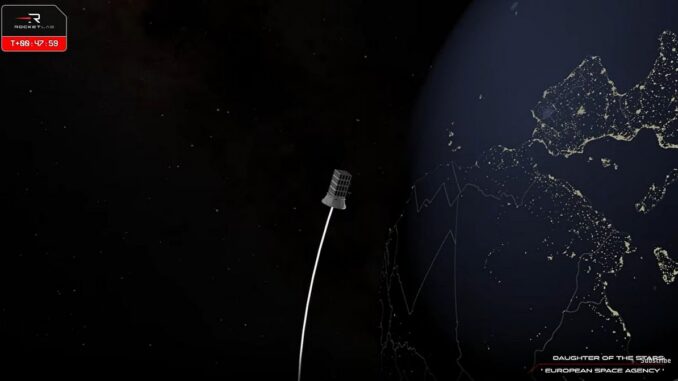
The mission, which includes Portuguese technology and which will test a new form of navigation using satellites in lower orbits, foresees the launch of 12 satellites, 11 of which are operational and one as a reserve.
According to the GMV team in Portugal, which played a relevant role in testing the satellite, contributing to the validation of critical components of the system, this launch marks “the beginning of a new generation of satellite navigation in Europe”.
The name of the European mission is a tribute to Maria Celeste, daughter of Galileo Galilei, reflecting the idea of a “daughter mission” that complements and reinforces the Galileo system.
“Just as Maria Celeste played a close and supportive role in her father’s scientific journey, this mission appears as an additional layer that reinforces the robustness, precision and resilience of the European satellite navigation system”, indicated GMV in Portugal.
According to the person responsible for the Celeste Program, Roberto Prieto, the mission comprises a complementary layer of satellites, flying closer to Earth, to improve the current Galileo system in medium Earth orbit (MEO).
“The current Galileo navigation system is the best in the world”, highlighted Prieto, “but it is vulnerable in some conditions, such as solar storms, and does not reach regions that are difficult to access.”
“The objective of Celeste is to complement the Galileo system in low Earth orbit, ensure that current European navigation systems continue to function, contribute to European strategic autonomy in this area and provide new services”, he added, quoted by EFE.
Leave a Reply