
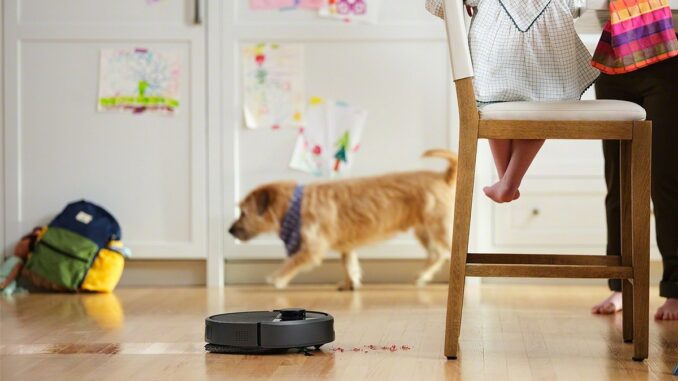
iRobot, a company that more than two decades ago demonstrated to the world how it is possible to delegate floor cleaning to algorithms, is no longer the same. After a troubled financial restructuring process (the so-called Chapter 11 of the US Commercial Law), the Massachusetts technology company emerged, in February, with a new face: 100% owned by Picea, an industrial giant from Shenzhen, China.
If for the markets this is a movement of survival and scale, for the millions of users whose homes are meticulously mapped on the company’s servers, the question is different: who, after all, holds the keys to these digital blueprints? In an exclusive interview with DN/Dinheiro Vivo, Nicolas Meurger, vice-president and general director of iRobot for the EMEA region (Europe, Middle East and Africa), explains the strategy used to safeguard this data. And he rejects the idea of the company’s “rebirth”. He prefers to talk about “refoundation”.
The objective is clear: to use Chinese producer muscle to bring twice as many models to the market as early as 2026, while trying to build an inverted “Chinese wall” that protects the sovereignty of customer data.
O bunker data: iRobot Safe
The big doubt that was created around this acquisition, as soon as it was announced, had to do with China’s 2017 National Intelligence Law, which obliges companies in that country to collaborate with the State’s intelligence services. Faced with fears that Beijing might gain access to millions of Western homes’ detailed maps or user metadata, iRobot responded with the creation of iRobot Safe Corporation.
“There is no change for European or American users”, assures Nicolas Meurger to DN. “We have established an entity in the US that is completely independent of the new parent company. This entity will host the data in the US, just as we did previously. It is our ‘control tower’ for data integrity and privacy.”
Leave a Reply