
The keys
nuevo
Generated with AI
nuevo
Generated with AI
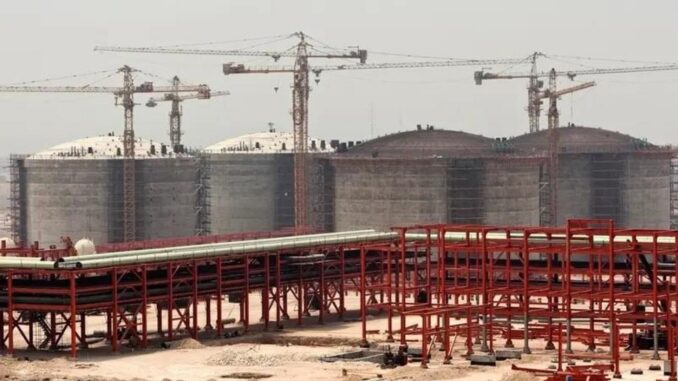
The aviation of Israelin coordination with the United States, attacked this Wednesday South Pars, the largest gas field in the world, shared between Iran and Qatar.
The gas complex located in Asaluyeh, in the southern province of Bushehr It constitutes one of the pillars of Iran’s economy and energy security.
After the bombing, the Iranian Revolutionary Guard has responded by issuing a alert for the evacuation of several oil facilities in Saudi Arabia, the United Arab Emirates and Qatar facing an attack “in the next few hours.”
The Qatari Foreign Ministry, for its part, has condemned the attack by Israeli military aviation against South Pars, calling it a “dangerous and irresponsible step” and a “threat to global energy security.”
According to the Tasnim agency, the attacks targeted the South Pars petrochemical facilities although the extent of the damage is still unknown.
Oil prices soared after Wednesday’s attack, and Brent crude futures (LCOc1) gained more than 4%, reaching a session high above $108 per barrel.
Analysts have already warned that any attack on South Pars would increase the possibility of retaliatory attacks by Iran against Gulf energy facilities, including those belonging to Qatar’s oil majors.
The US-Israel war against Iran and Tehran’s attacks on its Gulf neighbors have disrupted Middle East oil and natural gas exports and forced production to halt.
Key to the Iranian economy
South Pars is located in the Persian Gulf, off the southern Iranian coast, and is part of the same geological system that, on the Qatari side, is called North Dome, exploited independently by both countries.
It is a gigantic gas and condensate field discovered by the National Iranian Oil Company at the end of the 20th century, located several kilometers under the seabed.
For Iran, South Pars is the main source of natural gas, supplying most of the fuel consumed by the country itself.
That gas fuels power plants, petrochemical complexes and key refineries, such as those that produce a very significant portion of Iranian gasoline, making the field the heart of the national energy system.
Iran’s gas production amounted to 276 billion cubic meters in 2024, of which 94% was consumed in the country, according to data from the Forum of Gas Exporting Countries.
The economic impact of South Pars is also profound: its development has generated large incomes, massive employment and has favored the creation of an industrial corridor on the Gulf coast. In addition, it supports gas and condensate exports to neighboring countries and supports Tehran’s aspiration to act as a regional energy power, giving the field strong strategic value.
At the same time, the field faces significant challenges, such as field maturation and the need for costly investments to maintain pressure and production. International sanctions complicate access to technology and financing, forcing Iran to rely on local companies and raising the risk that, despite its enormous reserves, the country will end up suffering gas deficits in the coming years.
News in update
We are working on expanding this information. Shortly, the editorial staff of EL ESPAÑOL will offer you an update on all the data on this news.
To receive the latest news on your mobile phone, you can download our newspaper application to iOS devices y Androidas well as subscribe to access all exclusive content, receive our Newsletters and enjoy the Ñ Zone, only for subscribers.
Leave a Reply