
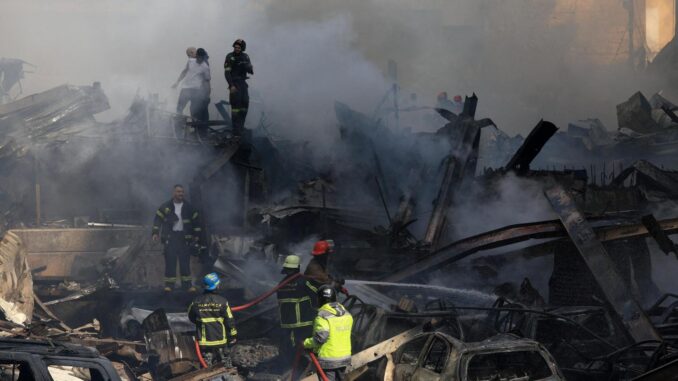
Minutes before the ceasefire between the US and Iran was announced, an Israeli attack killed 8 people and injured 20 on the seafront of Sidon, in southern Lebanon. It was the beginning of the largest offensive since March 2, with more than 100 attacks from Beirut to the Bekaa Valley.
More than 250 people would have lost their lives and there would be more than 700 injured according to the Reuters agency, while Israel warned that it would not respect the ceasefire in Lebanon. Hezbollah has not commented yet, but has asked the displaced to exercise caution and not return to their homes.
The war is also waged against the Lebanese health system. In just over a month of attacks, Israel has attacked 71 ambulances and 20 clinics. It has also forced the evacuation and closure of 6 hospitals and has killed at least 54 health workers, in addition to injuring 145 health workers. 12 of them have died in today’s attacks.
What Israel is applying what it learned in Gaza It’s no secret. The Tel Aviv army began the demolition of homes in villages in southern Lebanon in March after starting the ground offensive on March 16, considering them “outposts” of Hezbollah, a Shiite group that has a political and a military arm.
The attacks in southern Beirut are constant and almost daily since the beginning of March. The message when attacking different points in the center of the capital today and areas that are normally safe, such as the central neighborhood of Manara – with a Sunni majority – or the Corniche promenade, is clear: no place is safe.
Hamza (not his real name), a Beirut taxi driver, claims to have been saved “by a miracle” from this morning’s attacks. I was at one kilometer of one of the bombings, minutes before he had passed by there with his car. That has been “the distance between life and death,” he says scared.
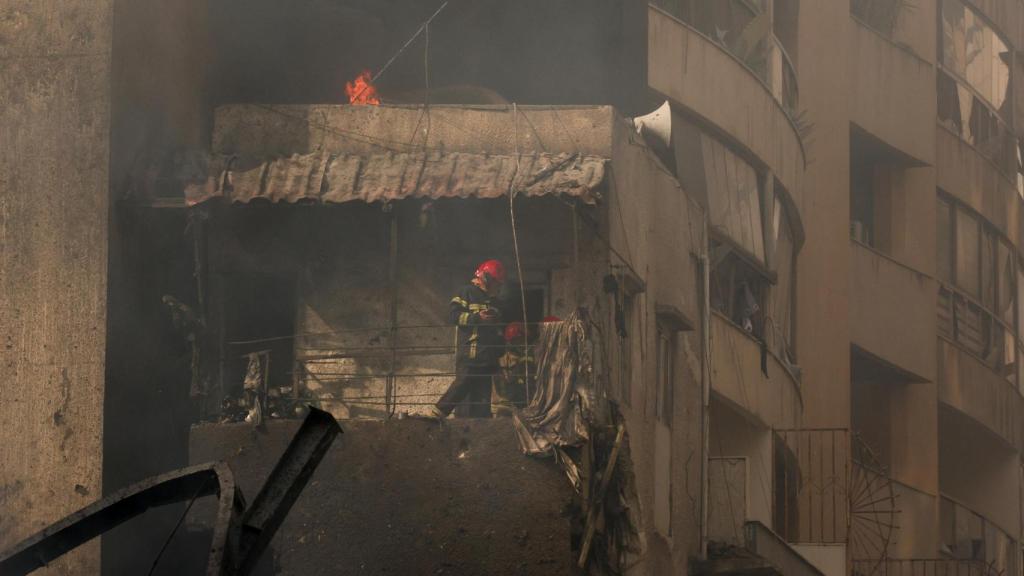
Bombings in Beirut.
On March 5, a few days after Hezbollah joined the regional conflict in favor of Iran, Israeli Finance Minister Bezalel Smotrich already announced that “very soon Dahiyeh will look like Khan Younis” within the framework of the evacuation orders announced by Israel.
Smotrich also took Gaza as a reference when announcing the creation of “a security zone” in the suburbs of Beirut and southern Lebanonc, “following the model of Rafah y Beit Hanoun“.
Prior to the advance of its Israeli troops has been reduced to rubble entire towns in order to ‘soften’ the terrain, in addition to blowing up the bridges over the Litani River that connect the south with the rest of the country.
On Sunday, April 6, Israel attacked without prior warning – sometimes issuing prior evacuation orders – a residential building in the Al Miqdad neighborhood, at the gates of Dahiyeh. Four people died and 39 were injured in this attack, according to the official Lebanese news agency, NNA.
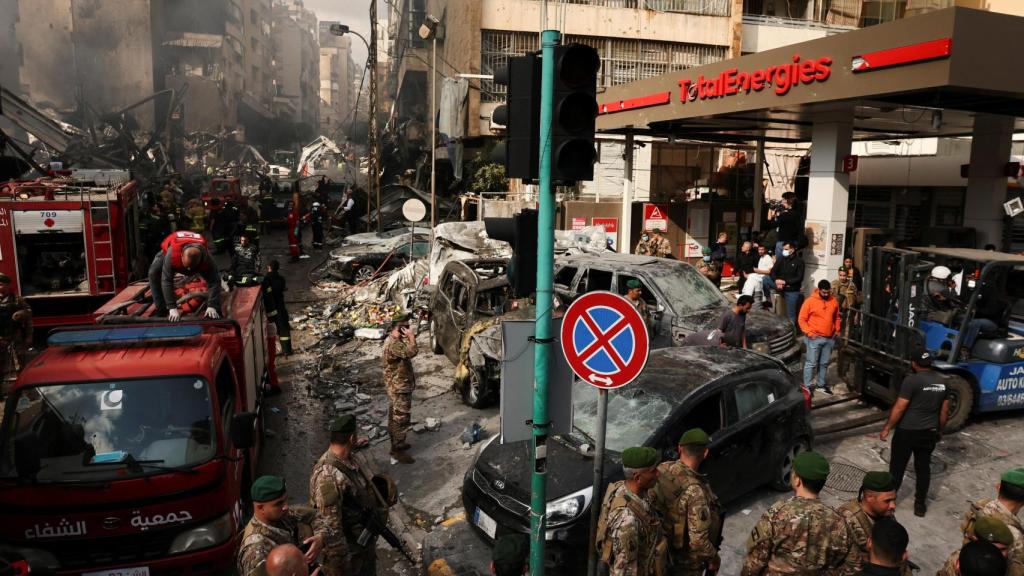
Bombing in Al Mazraa, Beirut.
Fatine Hamza, emergency doctor at the Rafik Hariri public hospital, which is located at the gates of Dahye, assures EL ESPAÑOL that those injured and killed in the attack were civilians.
“The building attacked is residential, and the injured and dead were, for the most part, immigrants from Africa. They did not carry any type of insignia or indication that they could be part of Hezbollah,” he concludes.
15,000 ceasefire violations
In the war in Lebanon at the end of 2024, Israel bombed civil infrastructureconsidered a war crime. During the subsequent ceasefire, according to the United Nations, Israel killed 127 civilians and violated the ceasefire near 15,000 times.
But Israel not only violates the ceasefire in Lebanon, it has also done so almost daily in the Gaza Strip since October 2025. The murder of journalists and medical staffas well as the demolition of civil infrastructure, are strategies used in Gaza and repeated in Lebanon.
On March 28, journalists Ali Shaib, Fátima Ftouni and Mohamad Ftouni They were killed in a direct attack against them while covering the conflict south of the Litani. In parallel, Avichay Adraee, IDF spokesperson, justifies these attacks on health services by claiming that they are being used militarilyfacts that the Lebanese security minister has denied.
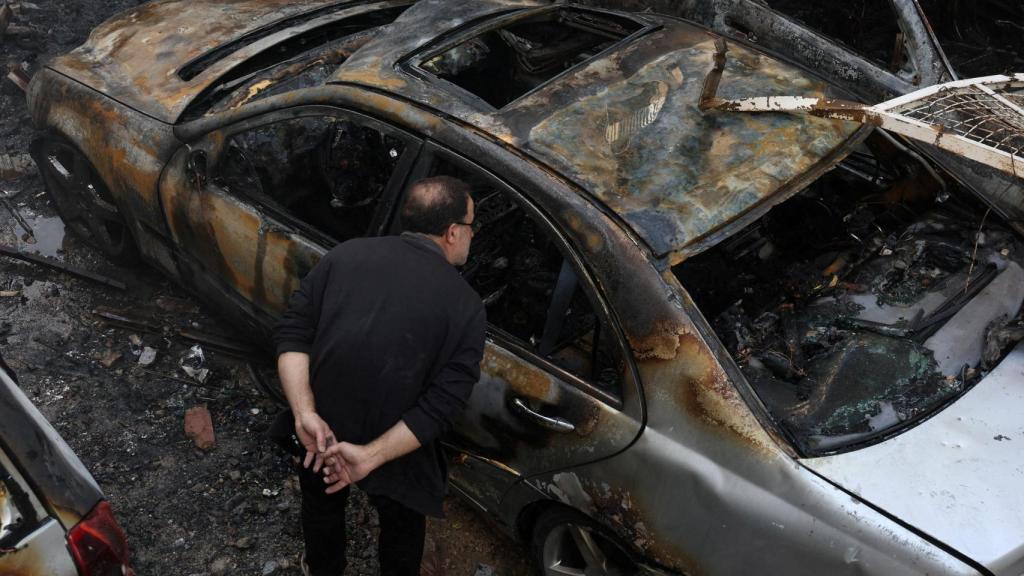
A Beirut resident inspects a burned-out car.
Luna Hammad, coordinator of Doctors Without Borders in Lebanon, explains to EL ESPAÑOL that the task of health workers, especially in the Nabathie hospital from the south of the country, is critical. Not only due to the volatility of the situation, but also due to the lack of resources.
It is very difficult to deliver these resources and material because “air attacks and intermittent escalations are taking place, so the road access is irregular. There are damaged routes, it is not safe to travel and even health centers and ambulances have been greatly affected. There is a greater risk of incidents occurring,” he explains.
Hospitals face real challenges to function “despite the fact that we are helping them even with fuel and supplies,” continues Hammad, although it is not enough to alleviate the lack of materials and medicines. A couple of weeks ago, a medicine warehouse was bombed near the Tebnine hospital, on the border with Israel.
Work and sleep in the hospital
In many cases in southern Lebanon, family members They live in medical centers and hospitals with their familiessince southern Lebanon is under evacuation orders and they have nowhere else to stay. In the capital, workers are the only ones who sleep in medical centers and their families are still at home.
On other occasions, “ambulance personnel have chosen spend the night in their ambulances and even in the hospital corridors if necessary, away from their families, while their relatives have been evacuated or placed in safer places,” explains Hammad.
In the case of Beirut hospitals, workers also sleep in the hospitals, although not for safety reasons. “This is to ensure that they are available for work at any time if they are needed,” explains Hamza.
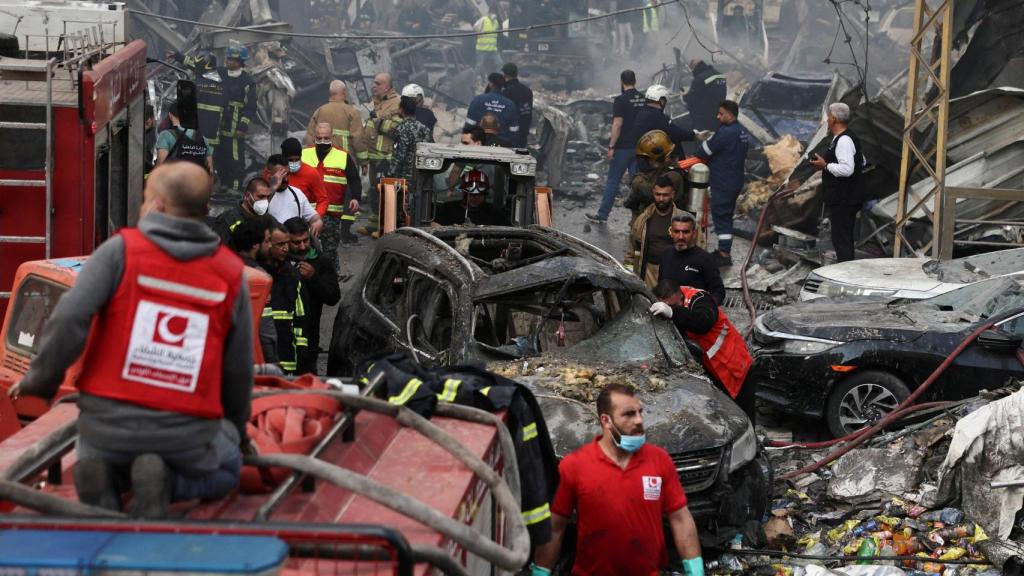
Destruction in Al Mazraa, Lebanon.
“It is even more necessary than ever to keep the hospital running, and they need fuel, oxygen, food and material health supplies, items that we are trying to deliver as best we can,” Hammad continues.
A health system under siege
In a bankrupt state, with an endemic economic crisis that has worsened due to the closure of the Strait of Hormuz and with inflation rising day after day, Hamad has no doubt that many of the health workers who sleep in hospitals do not do so just out of commitment.
“They do it for not having to pay for transportation like taxis or gasoline, the price of which is increasing day by day while salaries remain frozen,” he explains. Lebanon’s hospitals also urgently need blood donors, and the Lebanese Red Cross has put out an appeal.
As if this were not enough, the World Health Organization (WHO) has confirmed that between February 28 and April 6, 53 people died and 137 people were injured in more than 92 attacks on Lebanese vehicles, personnel, warehouses and health centers.
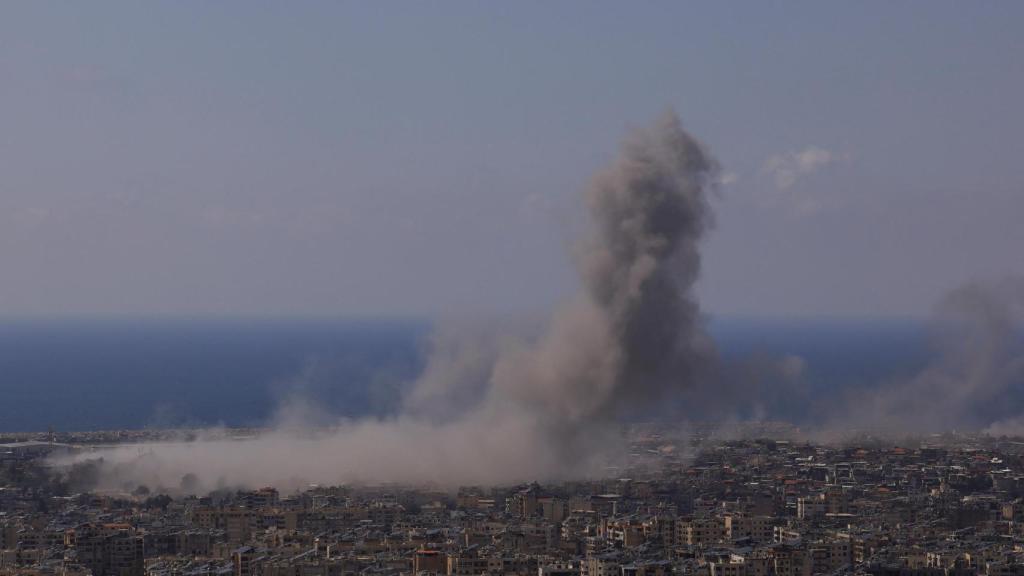
Smoke from the impacts in Beirut seen from a distance.
“These acts cannot become the new norm. The world must reaffirm, unequivocally, that healthcare protection is not optional“but a universal obligation and an indicator of our collective humanity,” WHO Director-General Tedros Adhanom Ghebreyesus said in a statement.
Until April 7, at least 1,530 dead, 4,812 injured and more than one million three hundred thousand displaced according to the Lebanese Ministry of Public Health. The hasty ceasefire reached last morning between Washington and Tehran leaves Lebanon in limbo and confusion while combat operations intensify.
Leave a Reply