
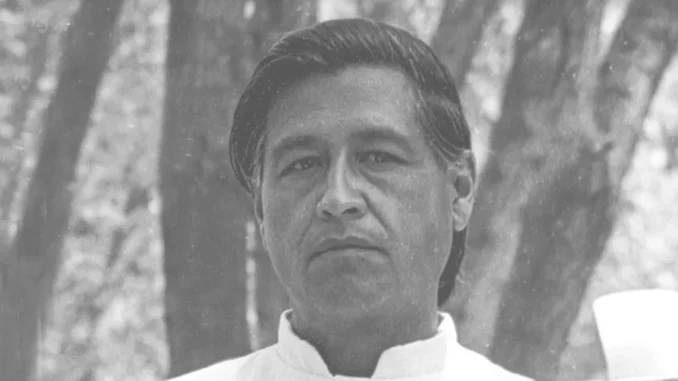
“I was 12 years old when he started touching me”said one of the complainants about César Chávez, a historical figure of agricultural unionism in the United States. His testimony, along with others collected in an investigation by The New York Times, triggered a review
unprecedented institutional legacy of the leader, a few days before March 31, a date dedicated to his commemoration.
César Chávez in the crosshairs
The accusations point to sexual abuse committed in the 1970s against minors linked to the peasant movement. Added to this is the testimony of Dolores Huerta, co-founder of the United Farm Workers union, who stated that Chávez forced her to maintain relationships in the sixties and maintained silence for decades so as not to affect the cause.
You may also be interested in: César Chávez, peasant leader in the US, is accused of child abuse
The political reaction has been immediate. In California, where the leader consolidated his influence,
legislators announced that they will promote the name change of the state holiday to
replace it with “Peasants’ Day”, with the aim of disassociating the commemoration from a figure now under question. The initiative could be approved in the coming days.
At the same time, authorities in cities like Los Angeles are considering eliminating the name of
Chávez of the local festivity and reconfigure his symbolic meaning. Texas and Arizona
They canceled the official celebrations in advance.
The impact extends to public space. In Sacramento the process has already begun to
rename Plaza César Chávez, while universities and cultural organizations
They review statues, buildings and recognitions associated with him. In some cases, the actions have been immediate, such as the coverage of sculptures on university campuses.
The governor of California, Gavin Newsom, acknowledged that the complaints force a
in-depth review of a figure considered for decades a reference for rights
civilians. Legislators and local authorities insisted on the need to focus attention on the victims and redefine the criteria for public recognition.
The discussion is not minor. Chavez, died in 1993, led key mobilizations that
They transformed working conditions in the American countryside. His figure became a widely institutionalized Latin symbol.
Leave a Reply