
WASHINGTON (AP).—The world economy is experiencing a disconcerting déjà vu of the 1970s.
Oil prices are soaring again in the wake of the war in the Middle East, driving up the cost of gasoline, diesel and jet fuel and threatening a return of stagflation, the toxic mix of higher prices and slower growth that made economic life so miserable half a century ago.
But the U.S. and world economies are less vulnerable now than when Saudi Arabia and other Middle Eastern oil producers withheld supplies to punish countries that supported Israel in the 1973 Yom Kippur War.
In response to that shock—and another unleashed six years later by the Iranian revolution—countries embarked on a new course to increase their energy efficiency, reduce their dependence on Middle Eastern oil, stockpile fuel in the face of future threats, and find and develop alternative sources of energy.
“We now have decades of experience dealing with these types of oil shocks,” said Amy Myers Jaffe, a research professor at New York University’s Center for Global Affairs.
Of course, the idea that Iran’s current energy shock could have been worse is of little comfort to frustrated American motorists who pay $4 or more for a gallon of gasoline, European farmers facing skyrocketing fertilizer prices, and street vendors in India who can’t get enough gas to cook curries and samosas for their customers.
Unprecedented
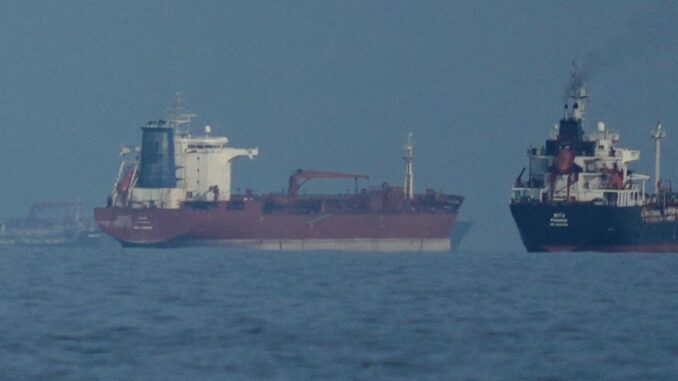
And the magnitude is simply unprecedented. In response to attacks by the United States and Israel that began on February 28, Iran de facto closed the Strait of Hormuz, through which 20 million barrels of oil, or a fifth of world production, flowed daily.
Changes the United States and other countries have made over the past five decades have limited the economic consequences of the war. In 1973, oil accounted for almost half—46%—of the world’s energy supply.
By 2023, oil’s share had fallen to 30%, according to the International Energy Agency.
The world continues to use more oil than ever: Consumption surpassed 100 million barrels a day last year, up from less than 60 million barrels a day in 1973. But a much larger share of global energy comes from other sources — such as natural gas, nuclear and solar — compared with five decades ago.
Detachment
The United States, in particular, has been shedding its dependence on foreign oil.
When the oil shock of ’73 hit, the United States’ domestic energy production was in decline and its dependence on oil imports was growing alarmingly. But the rise of fracking—injecting high-pressure water deep underground to extract previously difficult-to-obtain oil or gas from rock—reinvigorated U.S. energy production in the 21st century. By 2019, the United States had become a net oil exporter.
Sam Ori, executive director of the Energy Policy Institute at the University of Chicago, said that “the U.S. economy is much better positioned than it was in the 1970s,” when it was “particularly vulnerable to an oil price shock.”
The 1973 oil embargo was a strong wake-up call and created a shortage that caused long lines at gas stations in the United States.
But while those memories may have left a lasting impression on some, Jaffe maintains that today “it seems highly unlikely that long lines for gasoline, fuel rationing, and total fuel shortages will be repeated in the United States.”
Impact of crude oil
key closure
The de facto closure of the Strait of Hormuz has put at risk the transit of some 20 million barrels a day, a fifth of world production, putting pressure on international markets.
Overall deficit
Even with alternative routes, a shortage of 15 million barrels per day is estimated, equivalent to around 15% of global supply, well above previous energy crises.
Leave a Reply