
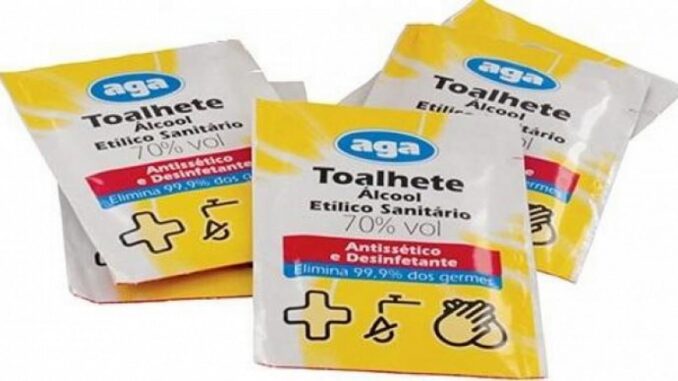
The environmental association Quercus calls for a ban on the sale of non-biodegradable wet wipes and for a “biodegradable” label to be created, and sent a letter to this effect to the Government and the Assembly of the Republic.
The request was released this Tuesday in a statement by the association, which in addition to the immediate ban on wipes, used by “almost 30%” of the continent’s population, calls for the discharge of all materials that harm the environment to be prohibited by law.
Quercus says that disposable wipes are responsible for the majority of sewage blockages, cause damage to sanitation and wastewater treatment infrastructure, and contribute to marine pollution, putting wildlife at risk.
The association says that, although practical, wet wipes “pose a serious threat” to the environment when disposed of incorrectly.
And warns that most products marketed as “disposable and biodegradable” contain “synthetic fibers that do not decompose easily when placed in the toilet”not dissolving like toilet paper, and therefore accumulate in sewage networks and cause blockages.
In the letter sent to all parliamentary groups and the Minister of Environment and Energy, Maria da Graça Carvalho, Quercus asks for legislation to end non-biodegradable wet wipes, warning that it is possible to place only “effectively biodegradable” products on the market, which already exist, with the ban being “the necessary lever for change” in the sector’s industry.
It also asks that the company Águas de Portugal make an annual estimate of the financial and environmental costs of the impact of wet wipes on wastewater treatment plants, and that legislation be passed to oblige wipe manufacturers to reimburse the costs of cleaning, transport and waste treatment, as well as financing awareness campaigns.
Quercus also calls for the creation of a “Biodegradable” label, which each producer must place, following a methodology like that already used, for example, in the United Kingdom, always with the indication that these products cannot be disposed of in the toilet, but rather in unsorted waste.
“At the user level, legislate to prohibit the discharge of wet wipes into domestic sewage, expanding the measure to other products such as condoms, medicines, pads, tampons, cigarette butts, cotton swabs or cooking oils”also asks the association, which still wants a national awareness campaign about what should not be put into domestic sewage.
“It is necessary to increase public awareness of this problem and promote more responsible behavior”says Quercus in the statement, noting that the products in question should never be placed in the toilet, even when labeled as “disposable and biodegradable”, and that the correct place is always the unsorted waste.
Leave a Reply