
The keys
nuevo
Generated with AI
nuevo
Generated with AI
Hungary votes this Sunday in a climate that breaks with more than a decade of political predictability. Since 2010, Viktor Orbán has chained sufficient majorities to govern smoothly, supported by an institutional system reformed under his mandate and a political hegemony that is difficult to question. However, today’s electoral event introduces an unprecedented variable: the real possibility of alternation.
Halfway through the day, participation already points to historical figures. Early in the morning, 16.89% of the electorate had voted and, at 11:00, the figure rose to 37.98%, with 7,527,742 votes registered. So far, the Békés region, southeast of Budapest, leads the participation: a county of about 60,000 peopletraditionally pro-government due to its conservative character and the strong presence of the Fidesz party.
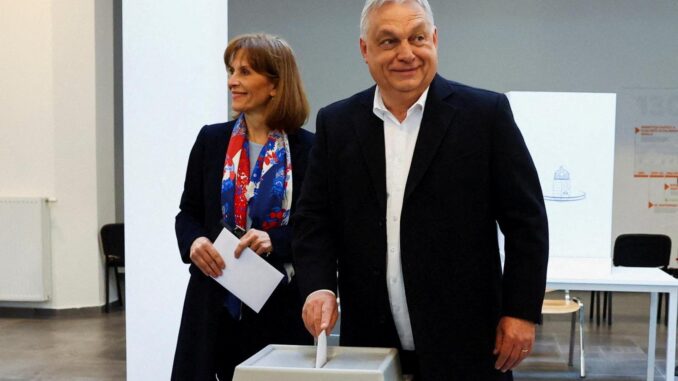
The prime minister, Viktor Orbánwent to vote at 08:00 in District I of Budapestat his party headquarters, Fideszfrom where he sent a message of confidence to the electorate by defending that his option represents “the safest.” Despite the climate of uncertainty surrounding these elections, he also assured who will recognize victory of its main rival if there is a change of government.
For his part, the opposition candidate Péter Hungarian has also cast his vote and has been openly optimistic, convinced that his formation, Tiszawill manage to win at the polls: “No one seriously thinks that Tisza is going to lose, nor does Hungary.”
Although some have been recorded minor reports Regarding logistical problems at certain points, such as delays in the opening of some ballot boxes, these do not seem to be affecting overall participation in a significant way.
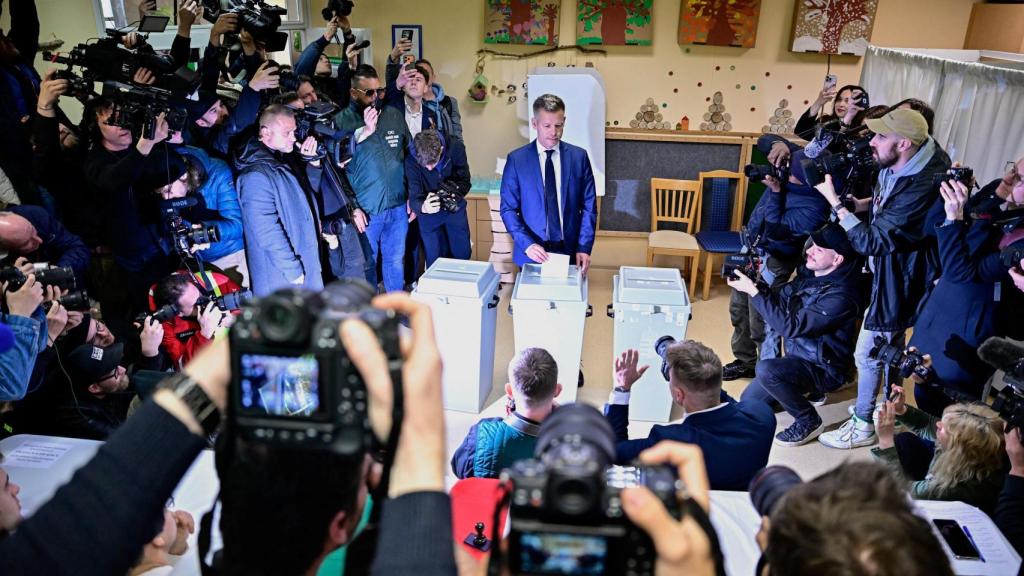
Peter Magyar, leader of the Tisza opposition party, casts his vote during the Hungarian parliamentary elections in Budapest, Hungary, on April 12, 2026.
A campaign of shocks
The campaign has been a clash between two opposing narratives about the country. Orbán has insisted on his message: national sovereignty, stability and rejection of external pressures, reinforced by a speech that links the opposition with foreign interests and with an alleged threat to national security in the context of the war in Ukraine. The focus is not new, but it has intensified in a more volatile international environment.
in front of him Péter Hungariana figure that alters the traditional logic of the opposition. It does not come from the margins of the system, but from within it: once linked to circles close to power, its break with the government environment has allowed it to build a story of credibility based on knowledge from within. This position has made it easier for him to articulate a speech focused on corruption, the functioning of institutions and the need to rebalance relations with the European Union.
It has been a very polarizedwith the constant exchange of accusations about external interference. The Government has repeatedly denounced attempts to influence by international actors, particularly from structures linked to the European Union and organizations financed from abroad. For their part, sectors of the opposition and independent analysts have pointed out the political and economic proximity of Budapest to Moscow as a relevant factor in the international positioning of the country.
The debate on the relationship between Hungary and Russia has returned to the international board. Since the beginning of the invasion of Ukraine In 2022, the Hungarian Executive has maintained a differentiated position within the European Union, opposing certain energy sanctions and preserving strategic agreements, especially in the gas field.
This positioning has fueled criticism from Brussels and has generated recurring suspicions about the degree of alignment of the Hungarian Government with the interests of the Kremlin. Added to this are the episodes in recent years regarding energy cooperation and political contacts, which have reinforced the perception of a pragmatic, but controversial relationship between both countries.
Why could Orbán lose now, after more than three decades of dominance? The answer is not unique. Natural wear and tear accumulated after years of concentrated power, visible in urban sectors and among younger voters. The appearance of Magyar has fragmented the traditional bloc of support for the Government, attracting voters who previously did not identify with the classic opposition. And in the economic context, tensions with the European Union – including disputes over community funds – have eroded part of the consensus that supported the Executive.
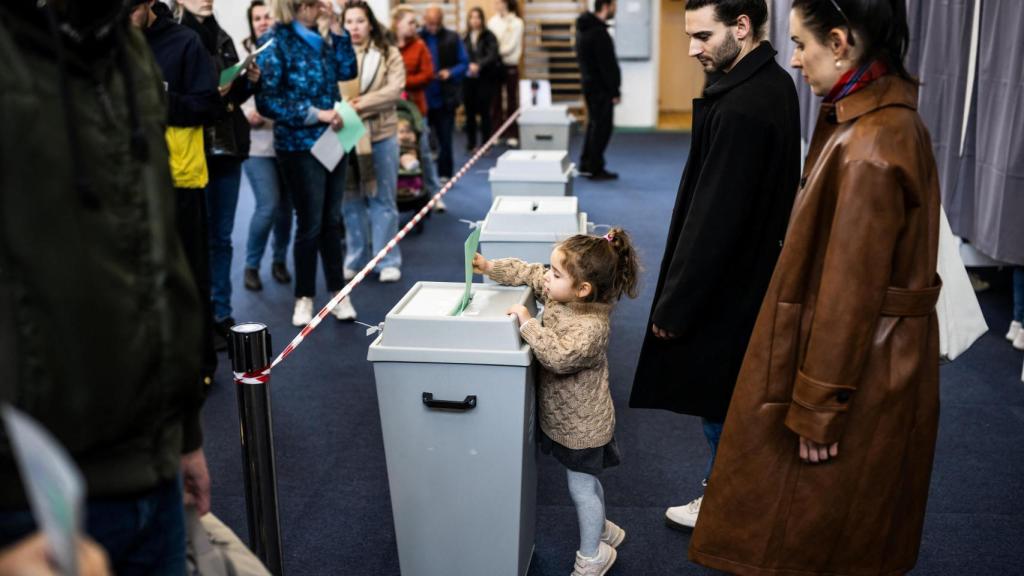
People vote during the Hungarian parliamentary elections in Budapest, Hungary, on April 12, 2026.
He electoral system remains a determining factor. His mixed designwith a relevant weight of single-member constituencies, favors forces with consolidated territorial implementation, which has historically benefited Fidesz.
Even in a scenario of a tie or slight advantage in the popular vote for the opposition, the translation into seats is not guaranteed. The opposition would need a homogeneous victory in majority of votes and win more districts than Viktor Orbán to snatch the seats of parliament.
The possible consequences of election day paint very different scenarios. A victory for Orbán would consolidate his political model and would foreseeably maintain the current line of selective confrontation with Brussels, combined with economic pragmatism. It would also reinforce his position as one of the longest-serving and most decisive leaders in contemporary European politics.
On the contrary, A Magyar victory would open a complex transition phase. His program aims at institutional reforms, but his ability to execute them would depend on parliamentary majorities that are not assured. It would also imply a foreseeable rapprochement with the European Union and a repositioning in foreign policy, especially with regard to Russia and the war in Ukraine.
Between both scenarios there is a third possibility: a fragmented Parliament that forces pacts and limits the next Government’s ability to maneuver. This result would introduce an unprecedented dynamic in recent Hungarian politics, characterized precisely by clear majorities.
What is at stake is not only a change of Government, but the continuity or revision of a political model that has marked Hungary for more than a decade. For the first time in years, the outcome is not written in advance.
Leave a Reply