
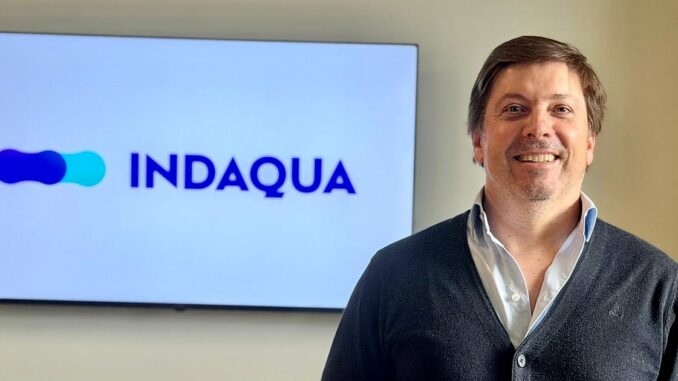
Turning on the tap and having water available and drinkable is such a normal act for us that we don’t always think about the logistics that such a gesture involves. Every day, thousands of professionals work to make this happen. “When we turn on the tap or use the sanitation system, there is continuous work behind it by multidisciplinary teams that ensure an essential service to public health, to the protection of the environment and the functioning of cities”, Luís Lourenço, director of human resources at the INDAQUA Group, which employs more than 900 professionals in the sector, tells DN.
According to the expert, they are “highly qualified professionals, often barely visible to the public, but absolutely crucial for the urban water cycle to function with quality, safety and sustainability“. They are operators of water and sewage treatment plants, network operation technicians, maintenance and leak detection teams. There are also laboratory technicians who ensure water quality control and engineering teams who plan and monitor investments and improvements in infrastructure.
But, if people don’t notice this work, that’s also a good sign, explains Luís Lourenço. “If the population does not notice the operation of these two services, it is a great sign. It means that everything works for the consumer: that they have a water and sanitation network availablewhich is connected to them and that these networks are 100% functional, with quality, security and continuity of service. It’s a sign that we’re doing our job well”, he highlights.
As in other sectors, there is difficulty in hiring labor. “The most challenging roles to fill are, above all, those that require specialized technical skills and operational experience in critical infrastructures”, highlights the professional. This is the case of operators, electromechanical maintenance technicians, instrumentation and automation, as well as professionals with experience in the operation and maintenance of supply and sanitation networks..
“These are very specific and demanding – either physically or because they need solid technical training, as well as practical knowledge acquired over several years of work in the sector“, he details. The company also identifies “some shortage of certain engineering profiles, particularly in the areas of environmental engineering, hydraulics, electrical engineering and automation, especially when they combine technical knowledge with experience in operating water and sanitation systems”.
Also like other areas, digitalization creates new jobs. “The growing digitalization of the sector has also increased the demand for professionals with skills in data analysis, telemetry systems, asset management and technological solutions applied to infrastructure management.“, he emphasizes.
Generational renewal
Luiz Lourenço believes that there is a lack of young people in these careers for two reasons: training and lack of interest. “We feel that these professions are not always sufficiently present in the professional choices of younger people”he explains.
The sector has “a relatively low social visibility, when compared to other areas that are more media-based or associated with digital technology”. At the same time, he considers that “there is indeed some shortage of specific technical training oriented to the operational needs of the water sector”, highlighting that the work requires “a significant learning curve”.
It is also a reflection of the lack of appreciation for technical careers. “For a long time, the traditional academic path was seen as the preferred path, to the detriment of technical professions, which are less recognized, despite requiring a high level of qualification and responsibility”.
Still, he states that “In recent years, some relevant steps have been taken in strengthening professional education and valuing more practice-oriented training paths“, which is positive for sectors such as water.
The company already observes that many workers are approaching retirement age, which reinforces the need for generational renewal. “As in many sectors linked to infrastructure and essential services, a significant proportion of professionals have many years of experience and are progressively approaching retirement age”account.
This is, therefore, one of the biggest challenges in the sector. “It is essential to ensure the transmission of this knowledge to new generations, through structured processes of integration, training and monitoring in the field.“, he states. It is also imperative “to continue attracting new professionals to the sector, ensuring a progressive renewal of teams and avoiding the loss of know-how critical”.
About immigrant laborthe human resources director states that he currently does not have a relevant weight. “The majority of professionals who ensure the operation are local workers, with knowledge of the territory where they work, which is particularly relevant in a service that requires proximity and quick response.”
Still, the scenario can evolve. “Immigrant labor can play an important complementary role, especially in more operational roles or in contexts where there is greater difficulty in recruiting professionals“, contextualizes.
In the future, it could be even more essential. “The contribution of these workers can be particularly relevant in strengthening the teams’ capacity and responding to specific needs in the labor market”, he concludes.
amanda.lima@dn.pt
Leave a Reply