

The Spanish legal system recognizes victims of terrorism.
Act No. 29/2011 on the Integrated Recognition and Protection of Victims of Terrorism stipulates that victims are not only those who are the direct target of an attack, but also all those who are injured or harmed as a result.
This criterion has both legal and statistical effects: all people who die as a result of a terrorist attack are part of the official history of victims, without distinction between listeners, drivers, bystanders or any other person affected by the attack.
For example, in an attack against Fernando Buesaso much so that, as heard above, they were recognized as victims, which shows how all victims of crime, direct or indirect, are included in the reports of the Ministry of the Interior.
The principle governing this accounting is clear: the causality of the damage.
However, in the context of gender-based violence, the treatment is different regulated by Ley Orgánica 1/2004 de Medidas de Protección Integral contra la Violencia de Gendero.
The site of the macho triple crime in Miranda de Ebro.
ICA
The State Pact Against Violence sought to correct this circumstance with a measure that the executive claimed was also intended to make visible indirect victims, given that the accuracy of these statistics is essential for a real meditation on the impact of violence against women in its jurisdiction of the couple.
Numbers are not just numbers: they reflect concrete lives, families and social consequences.
When statistics do not include all victims affected by the same act of violence or break the registers into separate blocks, it reduces the visibility of the problem and minimizes the perception of its magnitude.
More precisely, even the most serious acts can appear diluted in the public narrative, making prevention as difficult as social movements to protect victims.
The insistence of women’s organizations demanding specific categories or indicators solved the need to make visible a specific problem, its cause and the social effects of the phenomenon.
From this point of view, the first State Pact against gender-based violence demanded a statistical reformulation that would allow all victims of violent acts to be included in Act No. 1/2004.
However, the formula chosen by the executive for the recognition of this measure is unsatisfactory because the registry where other forms of violence against women appear is not binding for those who are affected by the same crime as the main victim and who have been victims of fatal crimes caused by acts that are classified in March Ley 1/2004.
“For society to understand and properly measure the extent of gender-based violence, it is essential to create the comprehensive record required by the State Compact.”
An appropriate solution will now be to create a category of “indirect victims”. at the same time, instead of being relegated to a separate block where their relation to gender-based violence is statistically diluted.
The difference in state treatment of victims of terrorism mitigates the problem of coherence.
While in this context the system adopts a broad criterion based on the causality of the harm, in the field of gender-based violence the main story is limited to the emotional relationship between the attacker and the victim, which indirectly fragments the public narrative of the phenomenon.
In any case, it should be made clear that the debate that has recently arisen in social circles centers on how data is presented and aggregated.
Reply sent Victoria Rosellthe government’s former delegate on gender-based violence confirms that it is considering the situation, and which acknowledges that in its reform these cases appear at the stage of “non-peer femicide” to be considered victims of a crime of peer violence.
We recognize from social media reports that these victims are registered in a separate state block, thus confirming that the record fragmentation warning is correct.
There are concrete lives outside of these statistical categories.
The triple murder of Valga in 2019, committed por José Luis Abet Lafuentein which they were asesinadas Sandra Boquete Pazos, Boquete Pazos sunrise y María Elena Rodríguez Camiñodisplay explaining this situation.
Sandra, a former aggressor, is on the official list of victims of gender violence. However, her mother and her mother – imprisoned in the same attack – do not appear in this state blockade.
Something similar was observed in the recent crime of Miranda de Ebro, where a man allegedly caused a fire that started the lives of three women: his wife, his mother and a young old woman.
Only a woman who had the same name as the attacker appears in the official report on gender-based violence, as can be seen in the official report issued by the government delegation, which refers exclusively to one of the three victims.
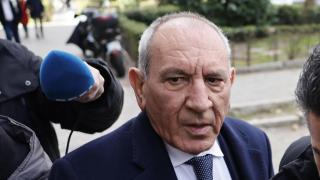
Two of the three fatal victims that were part of the historical narrative which shows the extent of the crime of intra-community violence.
The institutions that classified these deaths as “feminicide outside the scope of the law” are exempted from the legal criteria that claim to be in accordance with the jurisprudence of Legislative Decree 1/2004 and the indisputable fact that their death is caused by a crime in the context of violence in which the refiera dicha ley is.
An example of the consequences of this fragmentation was the recent public conviction of the Prime Minister for the triple crime in Miranda de Ebro.
I am truly sorry and dear to all the family and friends of the Asesino woman in Burgos.
We will never cry out against violence against women.
Dealing with macho terrorism is a state priority. #NiUnaMenos https://t.co/9fjlotSea7
— Pedro Sánchez (@sanchezcastejon) March 11, 2026
The Prime Minister’s message, built on detailed information from the Government Delegation against Violence, encouraged them to limit their condolences to only one of the victims (the direct victim), without mentioning the other two women who died as a result of the same act of violence.
This illustrates in a concrete way what we report in this article: when indirect victims are registered in separate blocks, only part of the tragedy is visible to the public.
The problem is not only legal: it is also historical, narrative, and ultimately moral.
In order for society to understand and properly measure the extent of this type of violence, it is essential to create the comprehensive record that the State Covenant requires.
*** Ángeles Álvarez is a political adviser to Igualdad and a former representative of the PSOE.
Leave a Reply