
Next April 25 will culminate four years of approval of the General Health Law, the most important law in building the Spanish health system.
This law was initiated in 1986 by the minister Ernest LluchI heard the foundation of the health care model we know today: a public, universal and fair system based on access to health care as a citizen’s right.
It is the basis on which we have maintained our enviable state of well-being to this day.
The Ley General de Sanidad claims to be the law for the construction of a national health care system. Although further regulations will be needed to complete them (such as the Ley de Cohesion y Calidad de 2003), I foresee a structural reform of everything that has been put in place.
A fundamental change was thus consolidated in the logic of our health care system: the adoption of a model linked to the provision of social security created by dictate (security) based on the principle of citizenship (citizen).
In order to finance mainly through taxes, the system introduces a clear redistributive component. All contribute according to economic capacity and all have access to health care as needed.
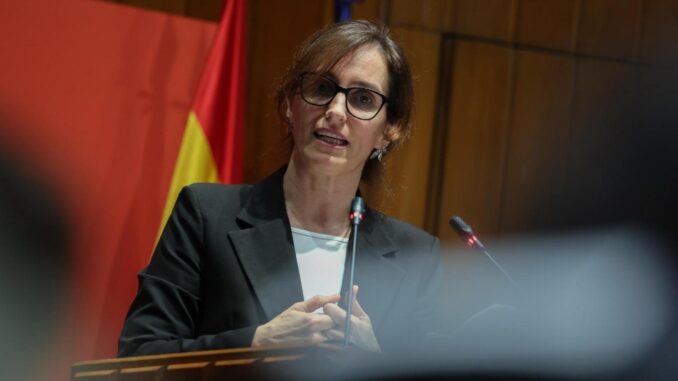
A patient with ELA experiences a new exoesqueleto at the Hospital Isabel Zendal after reaching the Health Council of the Community of Madrid, Fátima Matute.
That was clear. Promote a universal, fair and coherent health care system that guarantees health care for the entire population.
It doesn’t take much time for practical effects. Because today in EU countries, where the starting point is social debate, where there are no innuendoes.
And the effects are the same.
As seaworthy as it is, the process is not without political tension. The parliamentary process was completed and consensus was not immediate. The Parliamentary Club, which represented the current People’s Party, voted against the law.
Over time, however, the conversion of the standard to it ended one of the great institutional consensuses of our democracy.

When this party later, in 1996, entered government, I not only maintained the health care model it had set up until it contributed to its consolidation and development.
This is probably one of the main results of the Ley General de Sanidad. After building a common framework that allowed its development over decades despite political differences a healthcare system widely shared by Spanish society.
However, four years ago, the Spanish health system is completely different from the one that existed when this law was approached. The decentralization of autonomous community health care has been fully completed, the technological revolution has changed medical practice, and population diseases and chronic diseases have changed health care needs.
The system is also facing new organizational and financial strains.
From what we read, we realized this in 1991 through what we know as Inform Aprilwithout which we have given many cases.
“He was asked not to do anything because the system took hold and was producing good results. And from these rains . . .”
If we chose to stand still without introducing reforms that would allow us to adapt the system to deal with these problems.
It was decided not to do anything because the system had caught on and was giving good results.
And from the rains…
Only 25% of the articles of Act 86 are currently in force. Most of the original content of the General Health Act has been modified, superseded or superseded by subsequent regulatory developments.
Legislative reforms, European directives, autonomous laws, new health regulations and the system’s own institutional development have profoundly transformed the legal framework that this law establishes.
Included are some current articles that the health administration jumps into the arena with the most bizarre excuses for a very simple reason: they do not adapt to the reality that contemporary healthcare requires.
The Ley General de Sanidad continues to be a historical reference and a symbol of consensus in health care in Spain, but its regulatory architecture is outdated and outdated.
Not proceeding with the reforms that the system needs in time is not only a health problem, it is also an economic, social and institutional problem.
As of June 2025, the national health system accumulated 832,728 patients waiting for surgery with an average delay of 118.6 days.
This loss of accessibility doesn’t just worsen the citizens’ experience, if pressure relief also creates urgency, it facilitates clinical processes and affects the overall functioning of the country.
The OECD has warned that the rise in long-term and recurring labor costs in Spain (52% since 2018) is weighing on production and public spending, with costs estimated at €81,600 million, or 5.4% of GDP.
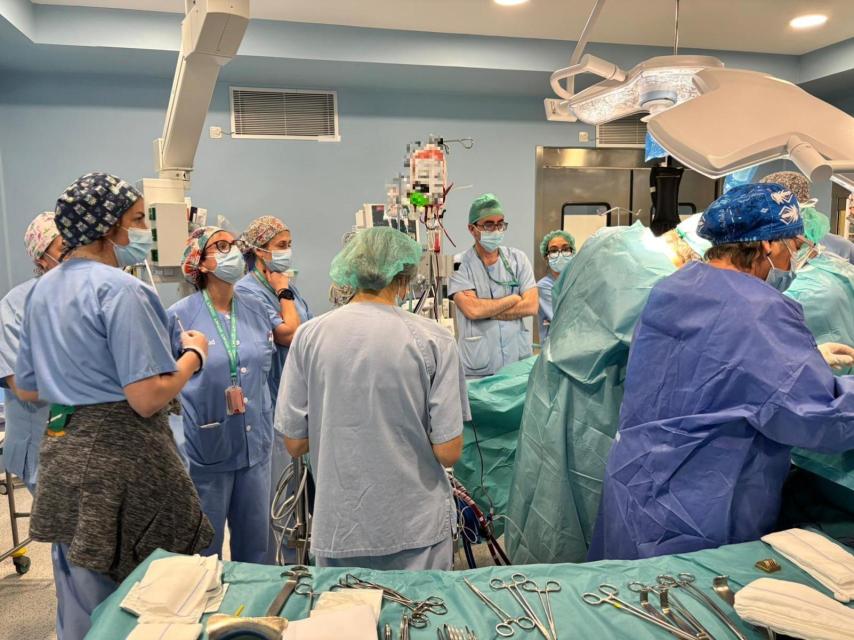
The San Jorge University Hospital in Huesca performs the first organ donation in controlled asystole using ECMO.
DGA
To this it is necessary to add the possibility of access to diagnostics, innovation or coverage of a number of services and services, mainly related to secondary prevention (early diagnosis), which is more important today than science and technology that could take them away.
Historically, the strength of the Spanish health system has been its ability to combine clear and undisputed principles (universality, equity and access) with different organizational models that have allowed the system to adapt to different territorial and health realities.
The fourth anniversary of the General Health Law should therefore also be an opportunity for a more ambitious reflection on the regulatory framework of the Spanish health system.
“The new health law must approve the points of consensus, and not the differences, because the former are much higher than the latter.”
More than a partial reform of the previously conceived law took many years, than the system in the construction industry, more than the placement of parcels was timed proceed with the development of a new healthcare law that regulates the national healthcare system XXI. century.
A bill with the support of the major political parties (which is going down immediately) and which transcends specific political interests must therefore be established as the norm that will once again guarantee the basis of our well-being for the next several decades.
A word that approves the points of agreement, and not the differences, for the former are far greater than the latter.
And because health is what we all, from each other’s political or ideological spectrum, love.
A new law that must preserve the basic principles that make our health system strong, but which at the same time contains the necessary elements to adapt it to the current reality:
1. Clearer administration in a decentralized system.
2. Greater orientation leads to evaluation of health outcomes.
3. Integration of technological innovations.
4. Developing a true national health data strategy.
Above all, however, we have to deal with the dimension that the Spanish health system is currently facing: social-health integration.
An aging population and the rise of chronic diseases are profoundly changing the nature of the attention that citizens require. More people need care that continuously combines health care and social support.
No embargo, our system Continue to work in large quantities with separate structures that make coordination difficult.
“As many years after the approval of the General Health Law, the Spanish health system continues to be one of the great collective logos of our democracy”
The INE predicts that the prime population aged 65 will fall from 20.4% today to 30.5% around 2055, with the weight of the working population decreasing.
If we don’t adjust organization, finance, administration and social-health integration, the result will be predictable: more demands, more wish lists, more dependency, more absenteeism and more impact on public finances and tension.
The new healthcare law must recognize this reality and promote a model that effectively integrates the health and social spheres and enables more complete and adequate responses to patient needs.
Four years after the approval of the Ley General de Sanidad, the Spanish health system continues to be one of the greatest collective logos of our democracy.
But that would make for an ambitious debate, with a clear goal of pursuing a vision of the future.
The General Health Act was a valid law because it responded to the needs of its time and because it was able to build a system where there would previously have been fragmentation.
In the coming decades, the best home we can achieve with this reform spirit will not be based on our original legal instruments, until we renew our ambition to design the health care system that Spain will need in the next few decades.
*** Juan Abarca Cidón is the president of HM Hospitales.
Leave a Reply