
The keys
nuevo
Generated with AI
nuevo
Generated with AI
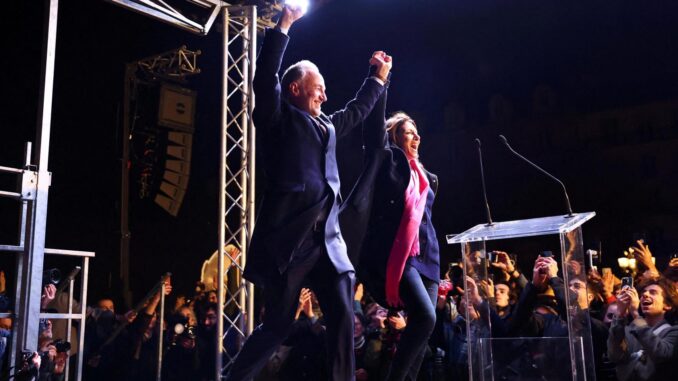
This Sunday the second round of the French municipal elections. At stake was the dominance of the big cities: Paris, Marseille, Lyon, Nice or Toulouse. Also, the keys to understanding what the fight for the Presidency of the Republic will be like in a year.
The qualitative balance of the first round in March was that the traditional right (The Republicans, LR) y el Socialist party (PS) were reinforced at the local level, while the far-right National Group (RN) gained ground, but without sweeping away.
The results of the second round can anticipate what the fight for the presidential elections will be like. For this reason, analysts launched extract the keys that predict what will happen in April 2027.

The first conclusion is that the advance of the extreme right is not unstoppable. It is true that his ally Éric Ciotti won in Nice, but the RN candidate started as a clear favorite in Marseille, France’s second city, and was surpassed by the socialists. The great south is tinged with moderation.
The lesson, thinking about the presidential elections, is that RN is advancing, but its ceiling in large cities is real. Traditional parties, when organized, can still block the progress of the extreme right.
The center resists
The second key is that the center is not dead. The president’s popularity index Emmanuel Macron reaches historic lows: according to the sociometry portal Statista, 78% of French people disapprove of his management. However, the centrist bloc obtained victory in important places, such as Le Havre, Bordeaux and Annecy. They also gained influence in Toulouse, Angers y Limoges.
Looking ahead to April 2027, the former prime minister Édouard Philippe He emerges as a candidate with possibilities against the push of the extreme right. Analysts point out that he will need a solid alliance to support him in the presidential elections if he wants to have a chance in a second round.
The left moderates
The left must pay attention to the third issue: alliances with the radicals of Rebellious France (LFI) penalize their results. The murder of a young far-rightist in Lyon and the anti-Semitic statements of Jean-Luc Mélenchon They have lost popular support.
The two best examples are Paris and Marseille. In both cases, the socialist candidates have won the mayoralty after getting rid of the burden of the extreme left. On the other hand, in the squares where PS and LFI presented a joint candidacy, as in Toulousethey have been defeated.
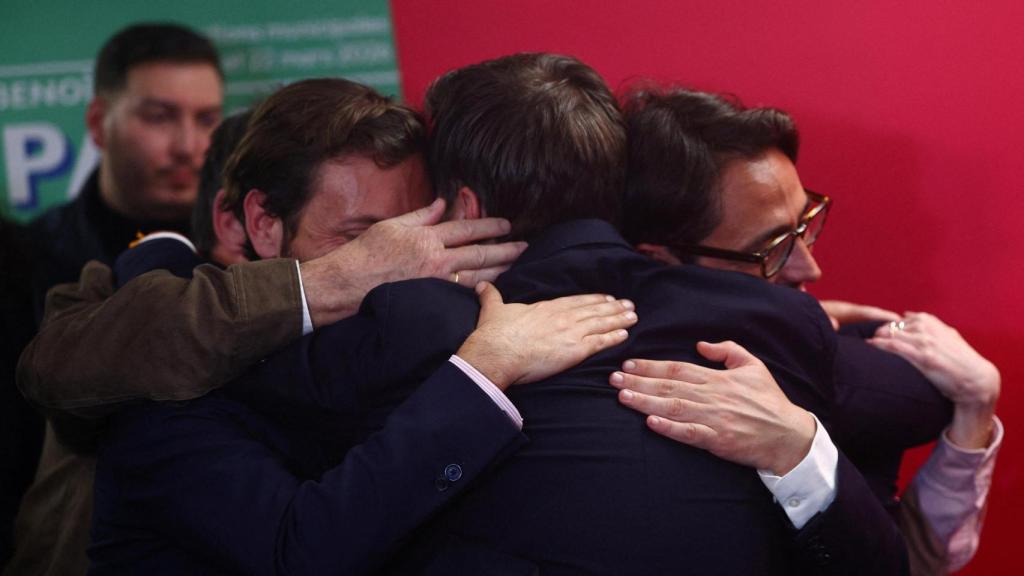
The socialist Benoit Payan celebrates his re-election as mayor of Marseille.
Reuters.
Some analysts state that the ‘factor Mélenchon‘, a highly polarizing figure, has found his ceiling. The leftist conceptions of both parties seem irreconcilable. A dilemma arises: going separately in the first round is bad, going together in the second is worse.
The fourth lesson corresponds to the environmentalists: his party (EELV) became mayor of Lyon with the ‘green wave’ that swept through the main French cities in 2020. The cost of living crisis and geopolitical instability have pushed environmental issues down the list of voters’ priorities.
The ‘greens’ lose steam
Historically, the ‘green’ vote has emerged from urban electorate upper-middle class. The loss of Bordeaux or Strasbourg and the narrow margin of victory in Lyon indicate that priorities have changed and the base of this party has weakened.
Finally, the results in Paris indicate that the local power of the traditional conservatives of the LR has a limit. The socialist candidate Emmanuel Grégoire she obtained 50.52% of the votes, compared to 41% for the conservative candidate Rachida Datawhich had the support of Macron’s centrists.
This case can be explained from the polarization of the right-wing candidate and the issue related to the former head of the alliance. Renault-Nissan, Carlos Ghosn. An alleged case of corruption is being investigated that involves Dati in the collection of fees related to influence peddling.
The traditional conservative base is solid, but stagnant. Looking ahead to the next elections, the question arises as to whether it will be wide enough whether to ensure passage from a first round or whether it will require a closer alliance with Macron’s party.
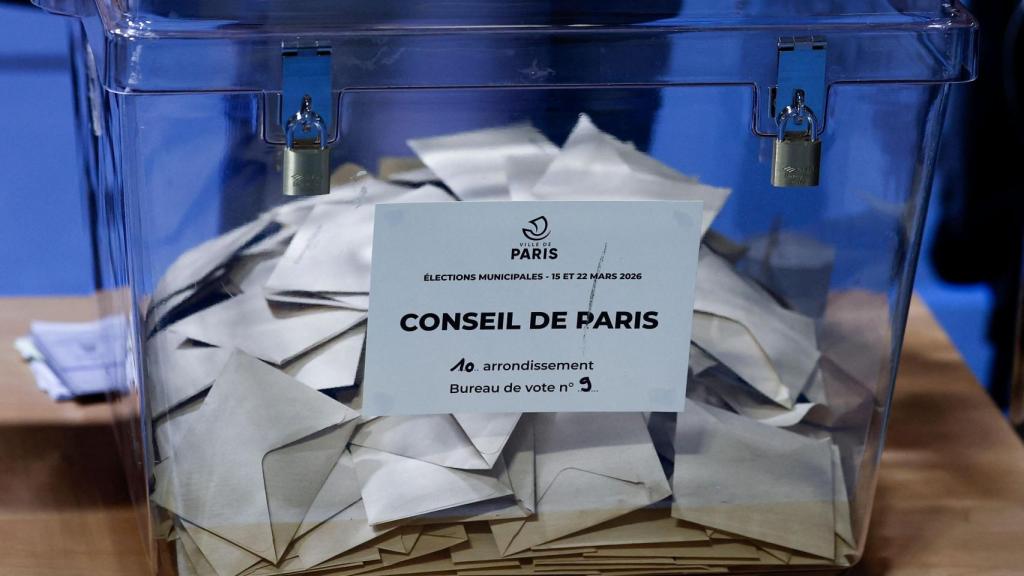
The polls are being prepared for the next appointment in April 2027.
Europa Press.
In summary, the left block is strongbut he obtains better results when he breaks away from his most radical allies. The extreme right is advancing, but it is not overwhelming as feared and it seems that it is already delimiting its space. The moderate right and the center continue to debate their future together or apart.
Extrapolating local results to the national level is risky. The action of municipal government has a tangible impact in the lives of citizens. Good mayors tend to repeat their mandate because voters pay more attention to what they do for the city and less to the acronyms they represent.
There is just over a year left until outline the positions thinking about the presidential elections. It is not a long time and the global context introduces factors that distract the attention of citizens. Perhaps for this reason, voters prefer to lean more towards moderation and leave extremism for another time.
Leave a Reply