
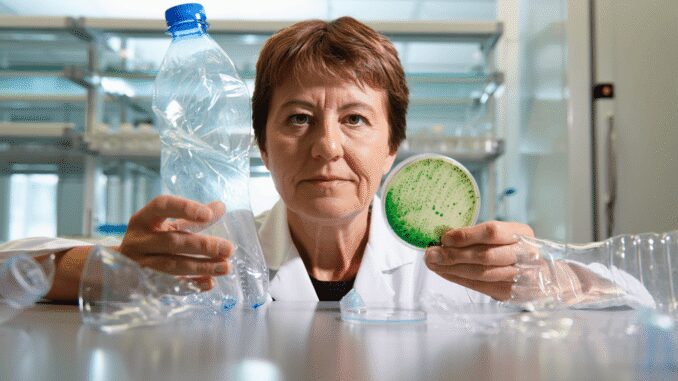
Researchers from the University of Edinburgh have shown that it is possible to convert waste PET bottles into L‑DOPAthe reference medicine for Parkinson’s disease, using modified bacteria. The advance presents a more sustainable alternative to pharmaceutical processes based on fossil fuels and raises questions about how to use plastic waste as a raw material today.
From bottle to drug: what scientists did
The team led by Dr. Stephen Wallace designed strains of E. coli capable of transforming the chemical blocks derived from PET into L-DOPA through a sequence of biological reactions. First, the polymer degrades to terephthalic acid; Then, the metabolic pathways introduced into the bacteria convert these molecules into the active ingredient.
According to the researchers, this is the first time that a biological procedure produces this compound from post-consumer plastic and that they have reached a preparatory scale, an intermediate step towards industrial production.
Why does this matter now?
The world generates tens of millions of tons of PET per year; Converting that wasted carbon into high-value products could reduce pressure on fossil resources and limit waste. For patients, an alternative production route means more resilience in pharmaceutical supply chains, especially in the face of disruptions in conventional production.
However, scientists emphasize that the process still needs to be optimized and its economic and environmental viability evaluated before it reaches the market.
Implications, challenges and next steps
The authors propose several fronts ahead: improving the performance of the bacteria, scaling the process without losing efficiency and rigorously measuring the balance of emissions and costs compared to traditional production.
- Starting material: PET (polyethylene terephthalate), common in food and beverage packaging.
- Product: L-DOPA, precursor of neurotransmitters such as dopamine; used in Parkinson’s and some movement disorders.
- Current status: production and isolation on a preparative scale in the laboratory.
- Challenges: scalability, regulatory compliance, environmental and economic impact analysis.
- Financing: The research is partly carried out within the Carbon-Loop Sustainable Biomanufacturing Hub, with public support to drive circular biomanufacturing in the UK.
Experts outside the study have highlighted the potential of the idea: reusing carbon from waste to make pharmaceuticals could redefine entire industries if it is proven safe and competitive.
Practical and scientific aspects to consider
The translation from a laboratory prototype to an industrial plant is not automatic. It will be necessary to confirm that the process meets standards of purity and pharmaceutical safety, that the yields are adequate and that the environmental footprint improves compared to conventional methods based on petrochemicals.
In addition, converting waste into drugs raises logistical (plastic collection and pretreatment), regulatory and public acceptance questions that the researchers recognize as part of the next phase of work.
If the following steps confirm the anticipated advantages, the technique could become a concrete example of circular economy applied to fine chemicals and medicine production, transforming an environmental problem into a source of valuable raw materials.
Similar items

Alonso Delgado covers the international news with rigor. You’ll find accurate and relevant reporting on major global events, from political crises to diplomatic breakthroughs.
Leave a Reply