
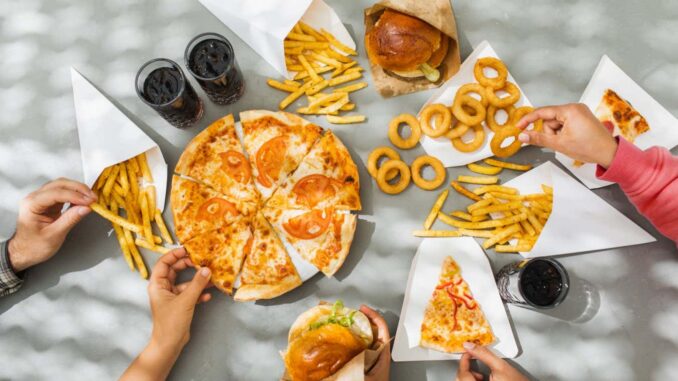
Ultra-processed foods are often high in fat and sugar
Anastasia Krivenok/Getty Images
In the last few years, there has been a growing hype from scientists, doctors and the media about ultra-processed foods (UPF). Some have warned that the trend toward more and more processed foods in our diets is primarily responsible for the enormous burden of chronic disease in the modern world. But what are UPFs, why are they bad for you, and how worried should you be?
The first question is surprisingly difficult to answer. People have processed food for millennia to make it tastier and last longer, for example by grinding grains, salting, drying, fermenting, pickling, and smoking. The term ultra-processed food was created in the late 2000s according to Carlos Monteiro at the University of Sao Paulo, Brazil, who defined it as a food created by breaking down whole foods into their components, such as sugars, fats, and fiber, and chemically modifying them into products, often with additives. Things in this category include breakfast cereals, biscuits, fish fingers, ice cream, cakes, mass-produced bread and carbonated drinks.
Traditionally, healthy eating advice focused on nutritional composition: we were told to avoid foods high in salt, sugar and saturated fat, and to choose foods high in fiber and vitamins. The UPF idea changed the conversation by suggesting that the degree of processing was more important in deciding which foods were unhealthy. Some countries, such as Brazil, Belgium and New Zealand, have changed their official dietary guidelines to encourage people to avoid these foods.
But is there evidence that UPFs are bad for you? There have now been more than 100 studies that have found that diets high in UPF are linked to poorer health, including a higher risk of cancer, diabetes, dementia, heart disease, bowel disease and obesity. But most of them only show correlation. Since this kind of diet tends to contain a lot of things that we know are bad for you, these studies don’t show that the processing itself is the problem. It is also difficult to separate the impact of diet from other lifestyle and environmental factors such as poverty and pollution. And many of these studies rely on questionnaires, which are notoriously unreliable because people are bad at remembering and honestly reporting what they eat.
The strongest evidence comes from randomized trial published in 2019 – but even that was just a small, short-term study. Twenty people were fed a diet high in UPF or unprocessed food for two weeks, then switched to a different diet for another two weeks. The diets were identical in terms of total calories, energy density, protein, carbohydrates, fat, fiber, sugars, and sodium. Volunteers were given three meals a day plus unlimited snacks and could eat as much or as little as they wanted.
On the UPF diet, the volunteers ate 500 more calories per day than on the unprocessed diet, and gained an average of less than a kilogram after two weeks. They lost just under a kilogram on an unprocessed diet. This suggests that the problem with UPF is that it makes us eat more calories. These dishes are designed to be delicious and more delicate, easy to digest and digestible, and we just can’t help ourselves.
But some scientists think they exist in other ways that could harm our health. They could be contaminated with toxins created in food factories. They often contain ingredients such as emulsifiersand there is some evidence that these chemicals may be harmful. UPFs can also disrupt our microbiome and promote inflammation. Some activists argue that UPFs should be subject to the same kinds of regulations as smoking: prominent warnings on packaging, advertising restrictions, school bans and high taxes.
On the other hand, critics argue that the evidence is not strong enough to support such a strict policy. They say the UPF label is too broad and can harm foods that are actually quite healthy, such as yogurt and whole wheat bread. Even nutritionists struggle to agree when asked to categorize a range of foods according to their level of processing, so how is the public supposed to understand which foods to avoid? What’s more, not everyone has the time or money to cook nutritious meals for themselves every day. Demonizing UPF could take away a valuable source of cheap and convenient nutrition.
So how worried should you be? While there are certainly problems with UPF as a category, it covers many foods that are unhealthy and designed to encourage overeating. Most of us would benefit from less UPF and more whole grains in our diet. But avoiding them completely is impractical and probably not even necessary. In any case, cut back, diversify your menu and cook for yourself when you can. But don’t be afraid to go back to ready-made pizza from time to time.
topics:
Leave a Reply