
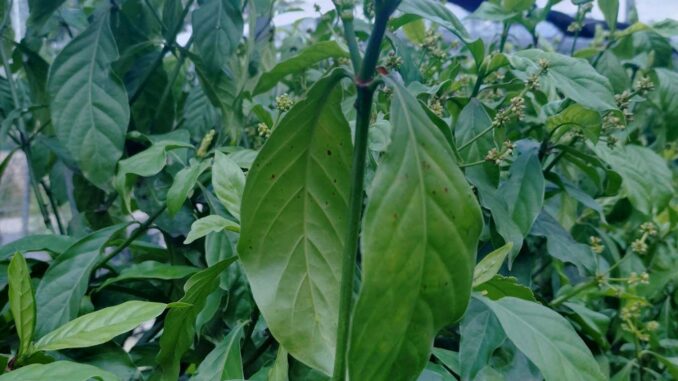
The tobacco plant has been engineered to produce five psychedelic drugs
Aharoni lab, Weizmann Institute of Science
Scientists have engineered tobacco plants to produce five powerful psychedelic compounds commonly found in other plants, fungi and animals in one crop. They argue that using plants to make drugs would be simpler and more sustainable than existing processes, making it easier to research therapeutic uses and make future drugs.
Asaph Aharoni at the Weizmann Institute of Science in Israel and his colleagues edited Nicotiana benthamiana plants using a technique called agroinfiltration, which involves using bacteria to introduce genes from other organisms into the plant. The modified plant then produces the proteins encoded by these genes, but the DNA is not incorporated into the plant’s genome, so the effect is short-lived.
With the addition of nine genes, the plants were able to produce psilocin and psilocybin, which are usually found in mushrooms; DMT from various plants; and bufotenine and 5-methoxy-DMT, compounds secreted by the Colorado river toad (Incilius alvarius).
Plants could easily be permanently altered with changes that become heritable, but that could be problematic because the compounds produced are commonly used as recreational drugs, Aharoni says. “It’s a bit tricky when we’ve inherited it, and then people will ask for seeds,” he says. “We can also do it in tomatoes, potatoes, corn.”
The medicinal use of psychedelic compounds is becoming more popular and better understood, Aharoni says, but harvesting them from natural sources puts the population at risk through habitat loss and overexploitation. The drugs are chemically synthesized for research use, but producing them in tobacco plants, which are easy to grow in greenhouses, would be much easier.
The idea of growing drugs through pharmaceutical agriculture or “pharming” is certainly not new. Plant-based protein drugs have been approved in the US since 2012, and as early as 2002, corn was engineered to produce a pharmaceutical protein. Another research team used tobacco plants in 2022 to synthesize cocaine and found that it could produce about 400 nanograms of cocaine per milligram of dried leaves—about 25th the level in the coca plant.
Rupert Fray at the University of Nottingham in the United Kingdom reports that around 25 percent of prescription drugs are derived in whole or in part from plants, and there are huge opportunities to create “green factories” that can grow new compounds in greenhouses.
“If you want to understand something, you have to be able to build something, so showing that you can make it in tobacco plants is useful,” says Fray. “As a technical achievement, to show that you understand the roads and can do it, I think there’s value in that.”
topics:
Leave a Reply