
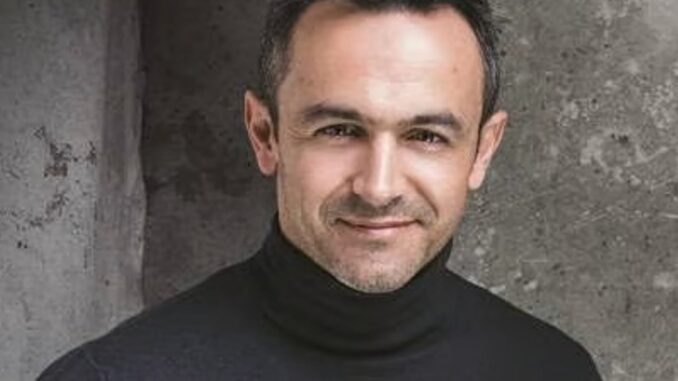
This week I received several messages from Men’s Health readers, people close to me and even public figures. All aiming for 50 years! “In 2030 I will be 50, are we going to be on the cover?”; “It’s not just Rio Ferdinand, look here at me, in shape at 53”; “I’m going to be 50 this year, would you consider doing a before and after challenge, which you usually do?”… This leads me to dare to transfer the middle age of men from the previous 40 to 50. Not only because of these messages, but because professionally I have been working in the male market for 25 years and, through Men’s Health, we regularly carry out studies on men’s habits and behaviors. But I will detail…
Man has a first reflection on his age when he turns 40, but a clear notion of how he wants to live at 50. It is probably at this age that the mirror stops being just a mirror and becomes an archive of memories. And the man becomes more determined. You feel that your body has changed at 40, but there is a clear accentuation after 50. And it “gets worse” if you don’t do anything about it. The man knows that!
Almost as important as sleeping well or being careful about what you eat is, at this stage of life, that practicing weight training is essential, as there is a natural loss of muscle mass. So even if you’ve never set foot in a gym, consider doing so.
Practicing bodybuilding (from 50 onwards) preserves and recovers muscle mass. This means being able to continue doing basic things like climbing stairs, carrying shopping or getting up from a chair, without depending on anyone. Secondly, because it protects the bones. Strength training stimulates bone density, preventing problems such as osteoporosis later in life. There is also a strong impact on metabolism: more muscle means better weight control, blood glucose control and a lower risk of diseases such as type 2 diabetes.
And I could continue here, with more warnings, advice and facts. But I believe you will find time to do two or three half-hour workouts a week, with basic and progressive exercises, if possible with guidance from a sports professional.
I know that for a long time the dominant discourse on sports ignored this age transition. “Against me I write”, but the culture of fitness continues to be built around bodies of 25 or 30 years. The training plans, the advertising images, the promises of physical transformation, everything seems designed for a phase of life in which the metabolism still accelerates easily and the body recovers almost automatically. But it is necessary to reverse common logic, speak directly to men over 50 and show them that these changes do not necessarily mean decline. In many cases they mean physical maturity.
Those who remain active at this stage discover something that is rarely explained when we are younger: training is no longer just about performance and it becomes about longevity. Running is no longer just for saving minutes in a race. It serves to protect the heart, preserve muscle, maintain mobility, and have more energy during the day. Exercise stops being an instrument of aesthetic transformation and becomes a health tool. It’s a different negotiation ahead. Less ego, more life.
Leave a Reply