


The reform to the Customs Law, which strengthens inspection and collection, as well as the modernization of processes, was published by Sheinbaum in the DOF; It will come into force, except for specific sections, in 2026.
Mexico City, November 19 (However).– The President Claudia Sheinbaum Pardo published this Wednesday in the Official Gazette of the Federation (DOF) the reform to the Customs Lawwhich will come into force in 2026except for specific exceptions, after it was endorsed in the Mexican Congressand that updates and improves the processes of the customsin addition to the improvement in inspection and collection.
“This Decree”, indicates the text published in it DOF, “will come into force on January 1, 2026, except for: the modification to article 86-A, section I, second paragraph, which comes into force the month following the start of validity; and articles 86-A, section III, 106, sections V and VI, 107 and 145, which come into force three months after the start of validity.”
The reform to the Customs Law was approved in Congress and, after a change requested by Sheinbaum so that it would come into force until 2026 due to negotiations with the United States and Canada, it passed to the President’s desk at the end of October.

Deputy Fernando Jorge Castro Trenti, from Morena, explained during the discussion in San Lázaro that the reform of the Customs Law is profound, since it disrupts old systems because it updates them, makes them transparent and includes technology because the processes will be video-surveillance.
With the reforms, he added, they will be able to have customs at the level of the best in the world in a country that in recent years has grown its Gross Domestic Product and has been transformed. “There will be more order, corruption will be swept from top to bottom, those who receive a patent will be co-responsible so that in the name of the State they can certify what goes out and what comes in,” he concluded.
The change in entry into force, argued the pro-government legislators, is to give time to the tax authorities, the National Customs Agency of Mexico (ANAM) and the Tax Administration Service (STA), to team up and be able to adapt their systems and standardize their procedures, train personnel and implement new technologies that provide control and traceability of goods.
With this reform to the Customs Law, they explained in the Senate, the rules are modernized for more competitive foreign trade and strengthens the transparency and legality of customs procedures.
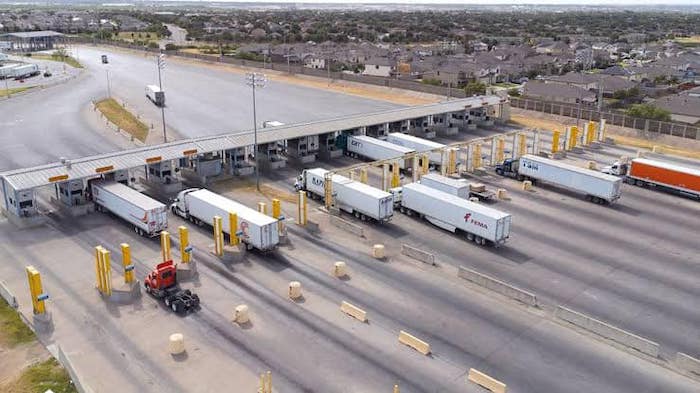
It also ensures fair, equitable and supportive collection that sustains public finances without new charges for citizens, in a context in which foreign trade income has increased 18.3 percent compared to 2024, that is, just over 1.07 trillion pesos, which is equivalent to 26 percent of the country’s tax income.
The ANAM will have the power to carry out inspection, inspection, collection and surveillance tasks on import and export operations, with the purpose of preventing acts of corruption and improving efficiency in customs processes.
For its part, the Ministry of Finance and Public Credit (SHCP) will be responsible for issuing the patents of customs agents and for exclusively authorizing the clearance of merchandise whose tariff fractions are duly approved, thus ensuring a more orderly and regulated management of international trade.
The reform also establishes that customs agents must present each year the information corresponding to their patrimonial evolution, in order to maintain permanent inventory control. In addition, banks authorized to operate customs accounts must submit a monthly declaration that includes the name and RFC of the users, as well as the amounts transferred to both the importers’ accounts and the Federation Treasury.

On the other hand, the initiative significantly increases the penalties for those who introduce prohibited goods or do not prove compliance with the corresponding regulations. These will be 250 to 300 percent of the commercial value of the imported goods, compared to previous fines that ranged between 70 to 100 percent.
Finally, the reform establishes economic sanctions, including a fine of up to eight thousand pesos for every 10 days of delay in the delivery of documents or reports required by the customs authorities, and a fine of two million for importing or exporting companies that do not comply with their obligations.
The Sheinbaum Government has accelerated the reform of the Customs Law to face one of the main problems at the beginning of its six-year term: the trafficking of the so-called “fiscal huachicol”, which is the smuggling of fuel from the United States through Mexican customs, disguised as another type of component that does not pay taxes or does so in a very reduced way, to obtain profits by selling it in the country illegally.