
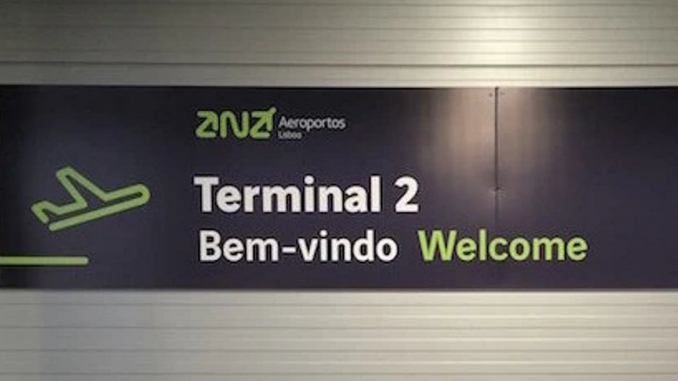
The European border control system for non-EU citizens, suspended in December at Lisbon airport due to constraints in the arrivals area, is working again, having been gradually resumed, the Government revealed this Friday, March 20th.
In a response sent to the Lusa agency, the Ministry of Internal Administration (MAI) states that the European border control system for non-EU citizens, called the Entry/Exit System (EES) of the European Union, “it has been gradually resumed since the beginning of the year and is now fully active”.
This new system went into operation on October 12th in Portugal and other countries in the Schengen area and since then waiting times have worsened, especially at Lisbon airport, with passengers having to wait, sometimes, several hours.
The introduction on December 10th at Portuguese airports of the second phase of the EES, which consists of the collection of biometric data (obtaining the passenger’s photograph and fingerprint), caused even more embarrassment, mainly at Lisbon airport.
At the end of December, the Government announced contingency measures at Humberto Delgado Airport, in Lisbon, to reduce waiting times in the arrivals area, namely the three-month suspension of the EES, which has now returned to full operation.
The EES is being implemented in a phased manner in the European Union, and its 100% operation across the entire community is scheduled for April.
In its response, the MAI admits that there have been “some operational constraints in the airport border control process and with the implementation, albeit in a phased manner, of the EES, these constraints have worsened”.
“To speed up the phased implementation of the EES – which will only be implemented in its entirety from April 10th –, trying to mitigate the impact on waiting time at border control, self-service kiosks were installed at airports, which will allow the collection of biometric data and completion of the travel questionnaire by third country nationals visiting us for temporary stays”adds the ministry supervised by Luís Neves.
Since Monday, Portugal has joined the European mobile application “Travel to Europe”, developed by the border control agency Frontex and which allows passengers covered by the EES to fill out the questionnaire upon pre-arrival, speeding up processing times at the border.
The ministry guarantees that MAI, PSP and other entities directly involved in this process “have worked in concert to implement measures that ensure the regular functioning of border controls at the main national airports, whether during the Easter period or as the high season approaches”.
According to MAI, this work includes continuous monitoring of passenger flows and adaptation of the operational device whenever necessary.
In addition to temporarily suspending the operation of the European entry and exit control system, the Government also reinforced Lisbon airport in December with 24 GNR soldiers, who, according to MAI, are “since then I have been working in the arrivals area to control documentation”.
Passenger control at airport borders is the responsibility of the PSP, a competence it inherited in 2023 from the Foreigners and Borders Service.
The EES system, which replaces traditional stamps in passports, applies to all non-EU citizens entering the territory for short-term stays (up to 90 days in a 180-day period), regardless of whether they require a visa.
Leave a Reply