
Among the new measures adopted to “protect consumers affected by the calamity”, network operators are “prevented from carrying out, at the request of suppliers, interruptions in the supply of electricity or reduction of contracted power due to a fact attributable to the customer (…) until February 13, 2027”, a measure that was extended to all voltage levels and which, in addition to domestic consumers, now also includes small businesses, industrial companies and large consumers, detailed ERSE.
Suppliers are also “prevented from billing customers affected by the calamity for any terms of power contracted during the period in which they were interrupted”.
ERSE determined that “if the suppliers have issued the invoice to the customer, the supplier will have to issue a credit note, which must be received before issuing a second invoice”.
“The same applies to network operators who are prevented from billing suppliers for the contracted power term during periods in which their customers were interrupted”, he also highlighted.
Regarding the calculation of billing variables, ERSE indicated that “special rules are created relating to power billing variables, in the case of electricity, or capacity in natural gas, in terms more favorable to consumers affected by the calamity, between January 28, 2026 and March 31, 2026”.
The regulator highlighted that it intends to “relieve the charges for contracted power on days when electricity was supplied, and for which there is a duty to pay for contracted power”.
“In the case of natural gas, we also seek to apply rules that allow the protection of all consumers, with special emphasis on companies that were prevented from operating due to the calamity situation”, he also highlighted.
ERSE indicated that violation of these extraordinary measures constitutes an offense punishable by the Energy Sector Sanctioning Regime.
Eighteen people died in Portugal following the passage of depressions Kristin, Leonardo and Marta, which also caused many hundreds of injuries and displacement.
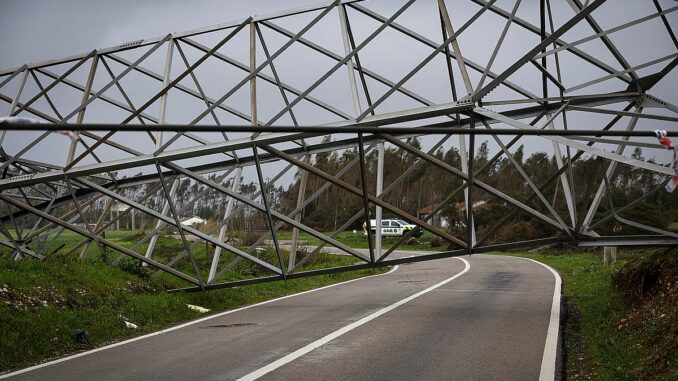
The total or partial destruction of homes, businesses and equipment, the fall of trees and structures, the closure of roads, schools and transport services, and the cut of energy, water and communications, floods and floods are the main material consequences of the storm.
The Centro, Lisbon and Vale do Tejo and Alentejo regions were the most affected.
The calamity situation that covered the 68 most affected municipalities ended on February 15th.
Leave a Reply