
On March 2, Hezbollah entered the conflict by launching missiles against Israel. Since that day, evacuation orders were issued in the south of the country and Dahiye—suburbs of Beirut—which has caused one million displaced. According to Lebanese authorities, at least 1,001 people – including 118 children – have been killed and 2,584 injured in Israeli attacks.
The day Israel issued the first evacuation orders, society was divided into two groups: the displaced and those who chose to stay to defend their land, or die in it. The father Pierre El Rahi It is from the second group. What’s more, he encouraged his parishioners to stay.
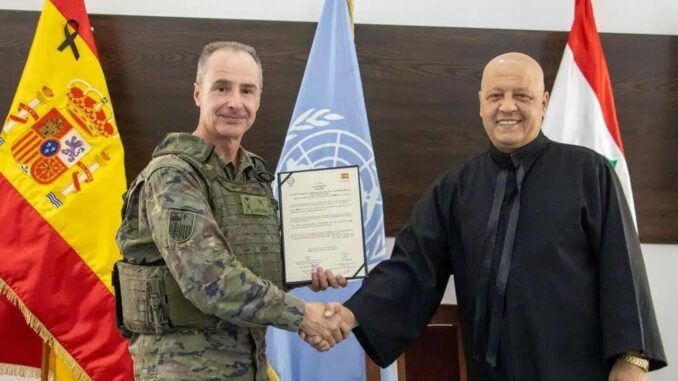
Precisely, on Friday, March 6, he could be seen at a ceremony with members of Cáritas, looking for support the Christian community who had decided to stay in their homes. They wanted to invite them to have enough courage not to flee as displaced people to other parts of the country.
It is in the village of Kleya where He was murdered on March 9 when he went to help one of his parishioners, whose home had been attacked. A second attack on that same house wounded the priest, who died outside the hospital.
The shepherd also had very good relationship with the Spanish contingent deployed in Lebanon that has 670 soldiers under the umbrella of the UN.
“Lebanon, especially the south, has been war zone for a long time. The situation began to get worse, especially in 2002,” explains EL ESPAÑOL. Father Bilalsuperior of the Jesuit center of Amman, in Jordan.
As regards the murder of Father Pierre, parish priest of the St George’s Maronite ChurchHe continues, “he decided to stay with his community when the population in the south was notified to evacuate.”
“What is usually said in these cases is that the victims are in a war zone, that both sides are bombing, and if you are there, you end up dead or injured and they have no responsibility,” explains the religious.
However, “the main problem in southern Lebanon is Hezbollah. And that is why, sadly, simple civilians are being affected,” concludes the father.
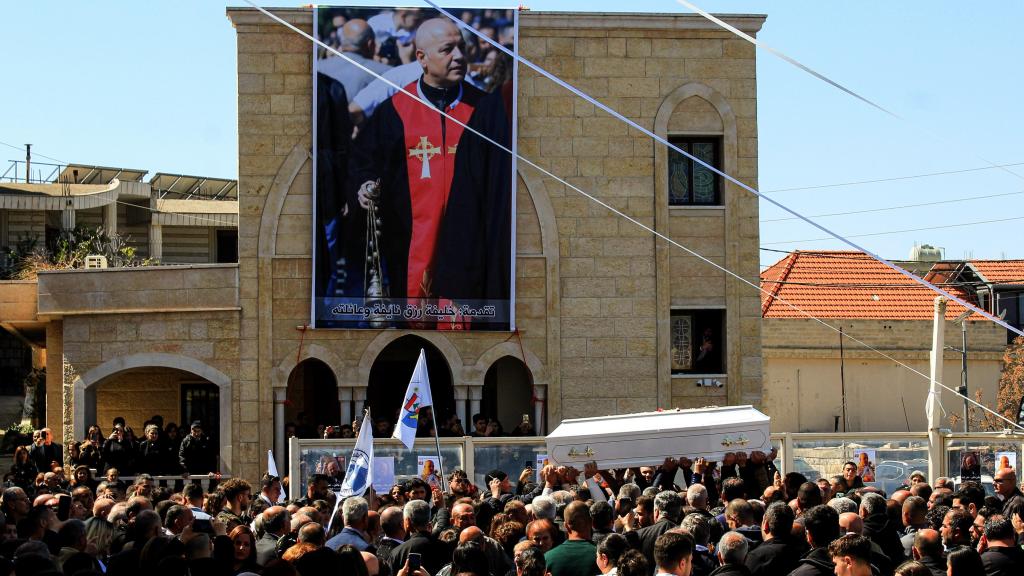
A photograph of Father Pierre El Rahi presides over his funeral in the village of Klaya.
Cracks in Lebanese society
In Lebanon, social cohesion is sometimes especially difficult. The sectarian divides of society – a melting pot of different ethnicities, religious creeds and very different cultures in a country the size of Asturias – can surface again every time there is tension or an escalation of war like the one we are seeing now.
The civil war that tore the country apart for 15 years ended in 1990 with no clear winner. All militias were disarmed except Hezbollah, born in 1982 and Iran’s main ally in the war against Israel and the United States.
“In Lebanon there has been a confessional political system since the end of the civil war, which means that the constitution determines what origin the president, the head of parliament, should be… which also generates different tensions,” he explains. Xabier Abu Eidpolitical analyst.
However, today the situation is different from what it was 20-30 years ago. “Today, the different sectors are more radical, like the Falange and Hezbollah“he continues.
Israel seeks exploit the sectarian issue in Lebanon to their advantage. “What Israel seeks by exploiting these tensions is that there are so many internal problems that people focus on domestic issues rather than combating external threats,” concludes Abu Eid.
In fact, the cracks in this very plural society have already begun to emerge. Many locals who offered rooms in their houses on Airbnb they have stopped doing itfor fear of whoever might enter their homes. What they fear is that their homes will become military targets.
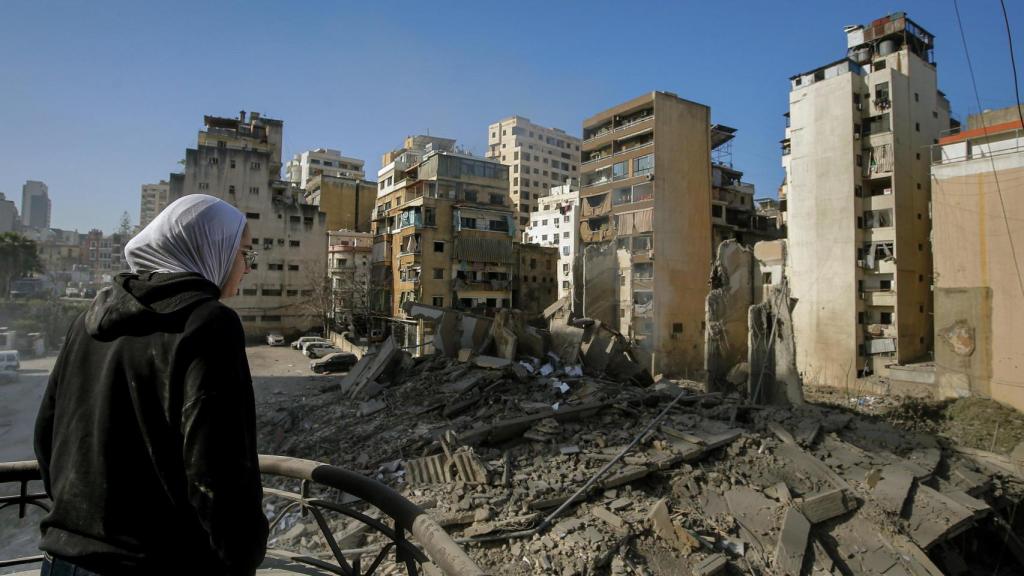
A woman looks at bombed buildings in Beirut. Marwan Naamani / dpa
The displaced people who run the risk of being further disowned are the shiitesbranch of Islam professed by the paramilitary militia Hezbollah and Iran. Beirutis, who are afraid that their homes will become targets, have closed the doors of their homes.
Among those who sleep rough there is also a risk of division. Again, the main outcasts would be the Shiites.
Reports from journalists based in Beirut affirm that areas of the capital far from Dahiyeh – the humble suburbs of the capital that are a stronghold of Hezbollah – that were until now considered “safe”, such as the centerare being targeted.
On Wednesday, March 18, Israeli missiles shot down a entire residential building in the center of Beirut, following an evacuation order. At least six people died in that attack.
Days before, on March 12, a drone attack killed at least 8 people on the capital’s Corniche promenade, converted into an improvised open-air refugee camp.
NGOs and orders, dedicated to the displaced
The economic crisis and consequent loss of one of the main sources of income, tourismis seriously affecting the fragile economy of the countries neighboring those in conflict.
If a large mass of refugees arrived in Jordan, where the Jesuits also have centers, their situation would be very difficult. For starters, refugees would have no right to work in the kingdom.
“If refugees start working legally, What will be left for the Jordanians in such a poor country?“explains Father Bilal. Without the right to employment, people would be created totally dependent on NGOs and the charity of religious orders such as the Jesuits.
To make matters even worse, “since Donald Trump was inaugurated president, the entire financing and donation system dropped considerably. “The flow of money that came through countries like Germany originating in the US was very limited.”
Because of this, “many NGOs had to stop their activity. In Jordan, for example, two and a half years our team members were 54. Now at the Jesuit Refugee Center there are only 8 employees left to manage everything,” says the parish priest.
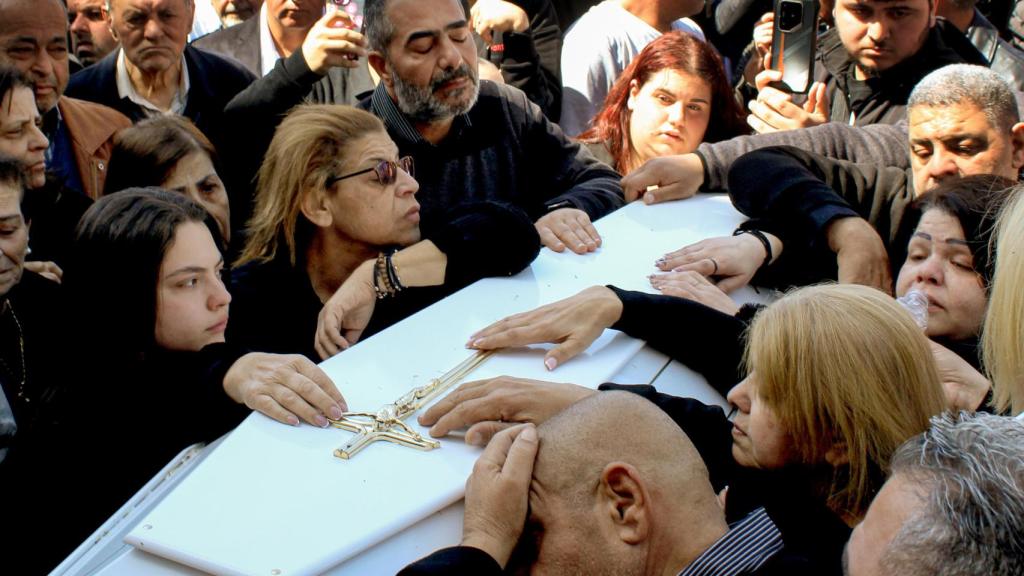
The white coffin of Father Pierre El Rahi.
Even so, and despite the tight budget they have, the Jesuits have a permanent center in Lebanon. Sadly, the country has been a territory at war for a long time, and they care for the Syrian refugees that the country welcomed when it was at peace. They also maintain an open center in Jordan.
“All NGOs and churches are trying to help Lebanon as much as possible. So, most churches are trying to give their schools, their hallways, any place possible to help the displaced,” he explains.
Even in the church and the house that the Jesuits own in Beirut, in the Ashrafieh neighborhood, he continues, “we have opened our doors for the displaced. We give them a place so they can clean up and rest. “Especially for women, that they can have a little bit of privacy.”
There is a situation in which governments are trying to do their best, churches and NGOs too, but the demand is very high, sometimes too high. “So given the situation, it is very difficult for Lebanese to leave the country and come here to Jordan,” he continues.
“Even Pope Leo XIV from the Vatican is in contact with us, the Jesuits, to help through the Vatican embassy in Lebanon. But not only the churches are lending a hand, the mosques too,” he says.
Thus, and despite the disagreements and quarrels between the different communities that are part of Lebanon, “the Sunnis, Shiites, Alawites and other sectarian groups have come together to help“, he concludes.
To make matters worse, the Holy Sepulcherlocated within the old city of Jerusalem and a sacred place for Christians around the world, is is closed at Easter for the first time in a while ages.
The last time it was closed to the faithful was in 1187. Now it is the turn of Christians, after Muslims have not been able to access the Al Aqsa mosque during the holy month of Ramadan, which ends today on the Eid fitr festival.
Leave a Reply