
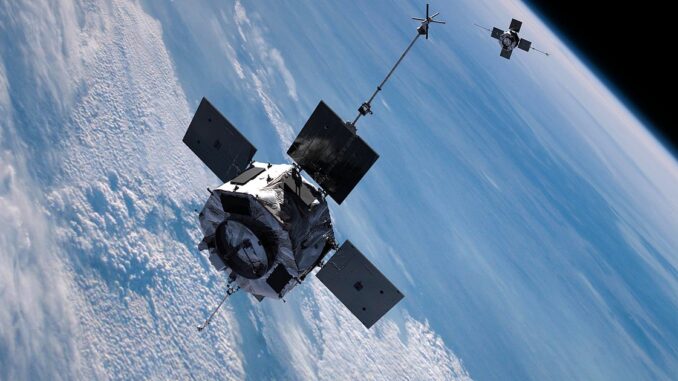
NASA’s Van Allen Probe A space probe is scheduled to return to Earth late tonight, Tuesday, March 10, 2026. After almost 14 years in orbit, the 600-kilogram device must cross the atmosphere in an uncontrolled manner, in an event that marks the definitive end of one of the most successful scientific missions in the study of the Earth’s magnetic field.
Launched in August 2012, the probe (also known as Radiation Belt Storm Probe A) spent seven years studying the Van Allen radiation belts, zones of energetic particles that surround our planet. The mission was officially declared over in 2019, when the device ran out of fuel necessary to maintain its orientation, starting a gradual and inevitable descent towards the atmosphere.
Re-entry is calculated for 11:45 pm (Lisbon time). According to experts from NASA and the United States Space Force, most of the probe’s structure will disintegrate due to friction in the atmosphere and the extreme temperatures generated by high-speed entry.
Although the term “out of control” may raise concern, the space agency emphasizes that the probability of any fragment hitting an inhabited area is extremely low, estimated at just 1 in 4200.
“The most likely destination for any debris that survives reentry is the ocean, away from coastal areas,” the official statement said. The twin probe, Van Allen Probe B, remains in orbit, although it is expected to follow the same path around the year 2030.
This type of atmospheric re-entry is a common procedure for end-of-life satellites that do not have propulsion systems for directed “deorbiting”, the Earth’s atmosphere itself serving as a natural “incinerator” to reduce space debris.
Leave a Reply