
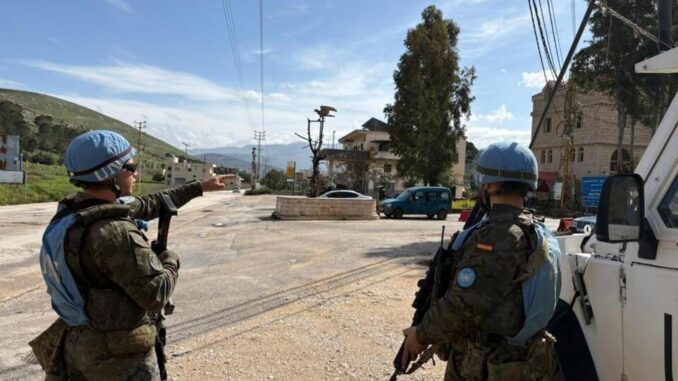
Miguel de Cervantes will once again witness a war between two religious confessions. The Spanish base in Lebanon that was named after the genius of Alcalá de Henares will presumably remain in the middle of the crossfire for the next few hours.
He will do so after the Israeli Prime Minister, Benjamin Netanyahugive your soldiers the final order to cross the “blue line” and enter Lebanese territory, expanding the area under Israeli control.
The president confirmed this Sunday that he will take another step in the military escalation by ordering his troops to “further expand the security zone” that they already dominate in the south of the country.
He did so through a video message with an unequivocal tone: Israel will not only maintain its presence, but will deepen it.
“I have decided further expand the safety zone” he announced, with the stated goal of keeping anti-tank missiles away from the northern border.
Netanyahu did not limit himself to justifying the operation: he promised to “radically change” the balance in that sensitive area, which has become one of the main sources of tension for months.
The new annexation defies Security Council resolution 1701 of the UN, which ended the 2006 war.
That decision urged Israel to withdraw from southern Lebanon below the “blue line,” which functions as a de facto unofficial border, and Hezbollah to retreat north of the Litani River.
The strip between both positions, about 30 kilometers, was conceived as a “buffer zone.”
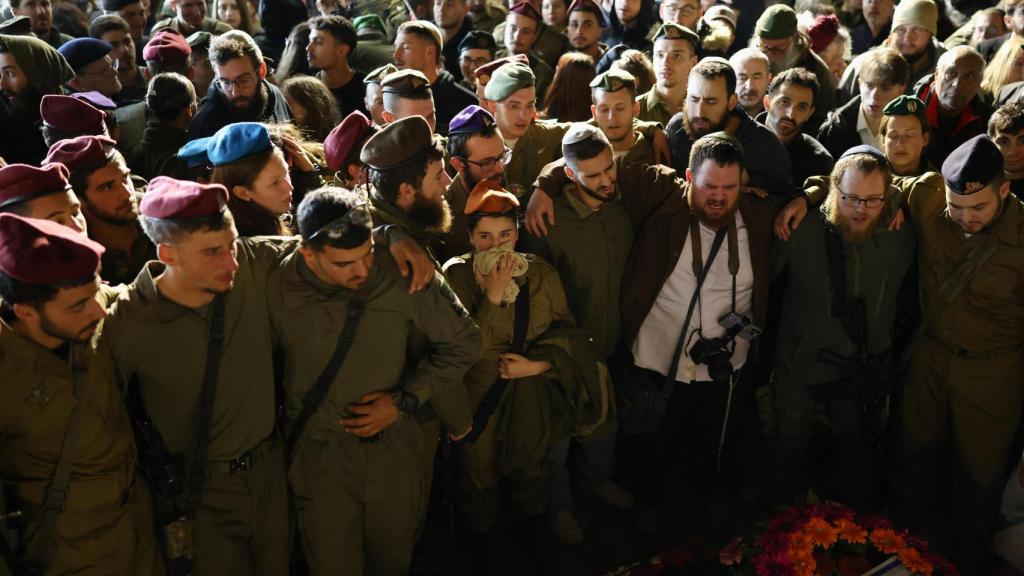
Funeral of Israeli soldier Moshe Yitzchak Hacohen Katz, killed in combat in southern Lebanon,
At least theoretically, only the Lebanese Army and the blue helmets of UNIFIL, the UN provisional force for Lebanon, in which more than 600 Spanish soldiers are deployed, can be deployed in that strip.
The pro-Iranian militia has never complied fully with his side of the deal and now, Netanyahu’s central argument once again points to Hezbollah.
According to the president, the Shiite militia “still retains a residual capacity” to launch rockets against the Israeli civilian population
That operating margin is what Israel is determined to eliminate. The decision, he explained, was made after consultations with the military and security leadership, in a movement that combines tactical pressure and political message.
But Netanyahu went beyond the Lebanese front. In his speech he drew a broader map, almost a doctrine: that of “security belts” in enemy territory.
He cited Syria—from Mount Hermon to Yarmouk—and the Gaza Strip, where Israel already controls more than half of the enclave, as examples of a new regional scenario shaped by the Israeli military initiative.
“We are taking the initiative“We are attacking,” he insisted, in a statement that breaks with the defensive logic that has marked the official discourse for years.
The final message was, perhaps, the most revealing.
Netanyahu outlined a strategic reading of the moment: “Iran is no longer the same Iran, Hezbollah is no longer the same Hezbollah, and Hamas is no longer the same Hamas.”
For the prime minister, these are no longer enemies in a position of existential threat, but rather weakened, “defeated” actors focused on survival. A statement that, rather than closing the conflict, anticipates its prolongation under new rules.
Spain, between two fires
In the area where the operations are expected to take place there are two key positions of the UN mission in Lebanon, including the base Miguel de Cervantesin Marjayoun, where Spanish troops are deployed.
Since 2006, Spain has participated in the United Nations Interim Force mission for Lebanon, created after the war between Israel and Hezbollah to monitor the ceasefire and guarantee stability.
Currently, some 660 Spanish soldiers They are part of the contingent, integrated into the Eastern sector of the operation, one of the most sensitive areas of the international deployment.
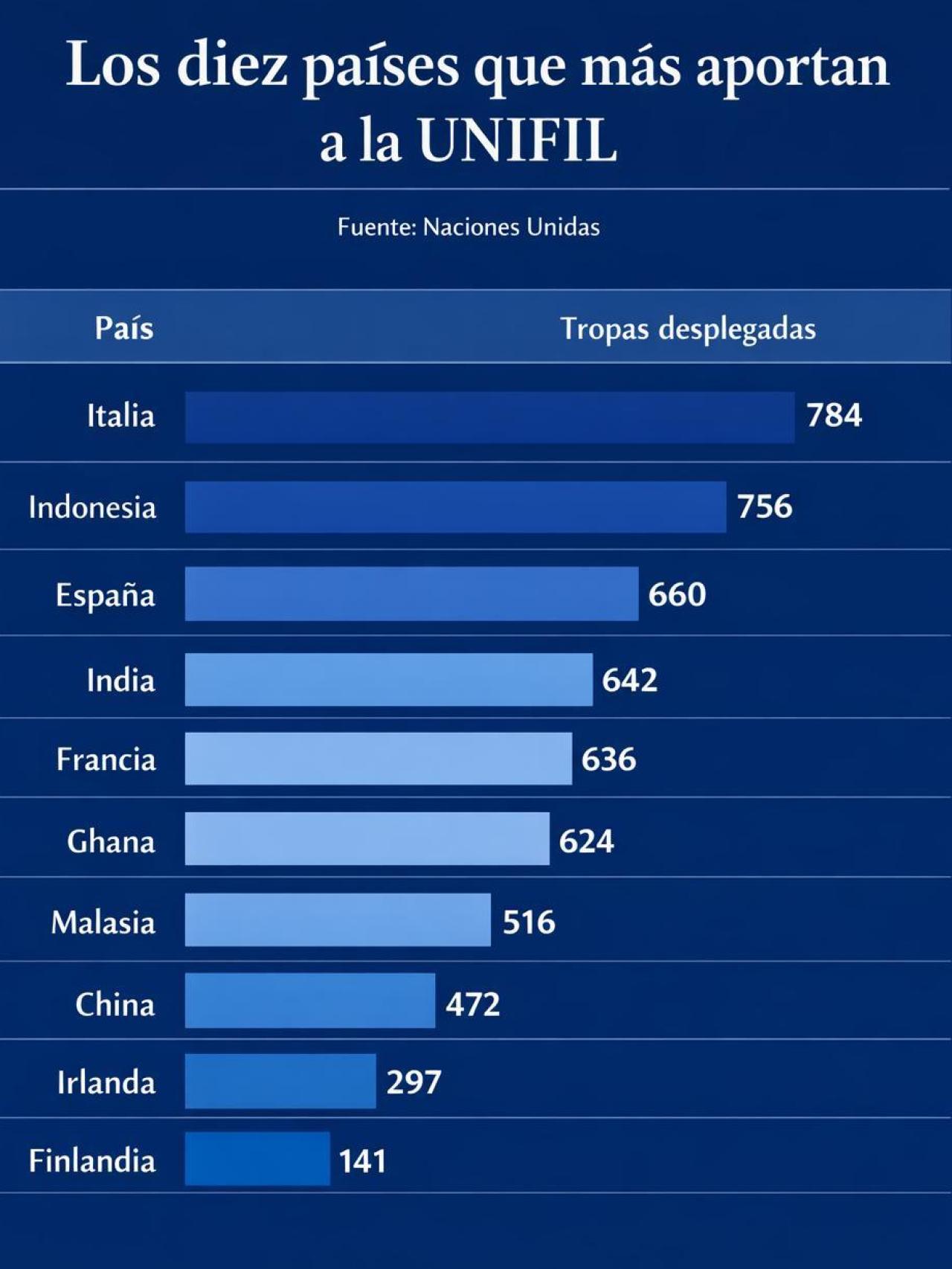
International participation in the UN mission
There is also a Spanish presence at the UNIFIL mission headquarters in Naqouranear the border with Israel.
In total, the mission has about 13,000 soldiers from ten countries. Italy has the largest contingent, with 784 soldiers, followed by Indonesia (756), Spain (660) and India (642).
Soldiers have protocols in place in case the situation escalates and frequently receive warnings from parties before an attack to avoid casualties.
When they occur, they enter security zones and avoid the risks that have already claimed the lives of 339 soldiers from the mission.
If the situation worsens, mission command could evaluate the situation and decide to withdraw, as already happened in Iraq or Afghanistan.
In any case, it is the entity that acts as an umbrella, in this case, the UN, that makes the decision. It never depends on the States.
UNIFIL’s mission ends on December 31. If the current schedule is met, the soldiers will leave Lebanon during the first half of 2027.
So, the objective will be for the Lebanese Army to assume security in southern Lebanon without a UN force component.
A goal that today seems like a chimera.
Leave a Reply