
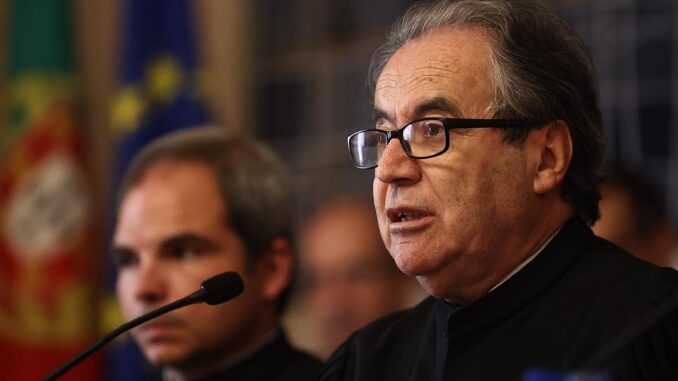
The president of the Constitutional Court (TC), José João Abrantes, defended this Wednesday (15) that the separation of powers is a pillar as essential to democracy as voting, rejecting criticisms that question the role of the court in relation to parliamentary majorities.
In the opening session of the colloquium “50 Years of the Constitution of the Portuguese Republic (1976-2026)”, which took place at the Calouste Gulbenkian Foundation, Abrantes responded directly to positions that call into question the legitimacy of the TC’s decisions when they contradict the will expressed by elected deputies.
“Recently, voices have been heard saying that the STF cannot contradict what the people voted for,” he said. And he added: “There are even those who question what sense it makes for the decision of a court of 13 judges to prevail over a majority of elected deputies. These voices forget that democratic legitimacy does not come solely from voting.”
For the president of the TC, this understanding ignores one of the structural foundations of the democratic regime. “The separation of powers is an equally important value for democracy and it has been this way since the Declaration of the Rights of Man and the Citizen of 1789”, he highlighted.
Abrantes also reinforced the role of the court as the ultimate guarantor of fundamental law, stating that the TC is “the guardian of the Constitution” of 1976. “Whenever a parliamentary majority wants to curtail any fundamental right, the Constitution does not allow it. Ultimately, the STF is ensuring that this is the case”he declared.
In the same speech, the official ruled out the need for an imminent constitutional review. “A constitutional review is not urgent, much less with the content that some voices out there have been proclaiming”, he said, admitting only the possibility of “surgical changes” in specific matters such as public health, metadata or criminal protection of animals.
“The Constitution is not a problem”, he insisted, aligning himself with the position of the President of the Republic, António José Seguro, who recently considered that the failures in achieving a “fair and supportive society” are due more to the (in)action of governments than to the constitutional text.
* With Lusa
Leave a Reply