
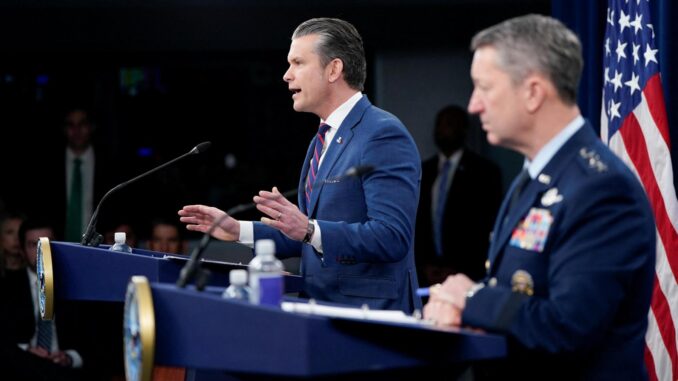
The Pentagon is considering invading the strategic island Abu Musa and two others next, Big Tunb and Little Tunbas an option to control the Strait of Hormuz. The plan would be to station ground troops there to help restore oil routes.
Military sources consulted by the news portal Axios They assured this Thursday that different alternatives are being debated. Most of them consider the use of marines or airborne forces that would intervene after a massive bombing campaign.
Abu Musa and the Tunb Islands are located about 70 km from the coast of Iran and just over 60 from the western end of the strait. They are positions of great strategic value to control the energy corridor.
They are part of an island group under Iranian administration, whose sovereignty has been disputed for decades over United Arab Emirates. In particular, the emirate of Sharjah It claims effective control of the territories, occupied by the Persian Army in 1971 after the withdrawal of the British from the region.
Of all the possible alternativesit seems that this is the most plausible. It could be executed with the means that are approaching the area. It has the support of the Gulf allies, especially the Emirates, and, if successful, it would be the most notable achievement for public opinion since the start of the war.
English translation of the message from the President of the Iranian Parliament, Mohammad Baqer Qalibaf.
EE.
The Iranians themselves they seem to be warned. The president of Parliament and current strong man of the regime, Mohammed Baqer Alibafdeclared this Wednesday through the X network that “Iran’s enemies are preparing to occupy one of our islands with the support of one of the countries in the region.”
Attack plans
In recent weeks, the possibility of a marine landing in the Jark oil island. However, the operation involves extreme difficulty: to get there, military units must cross Hormuz and sail some 800 km north of the Arabian Sea.
Other options are considered, such as invading the island of Larak. Iranian fast boats hide there and harass ships trying to cross the strait. Also, capture the ships that transport crude oil to the east of Hormuz to strangle the flow of oil to Asia.
The Abu Musa and Tunb archipelago is an easier-to-access target. The distance to the coast of the Emirates is just over 50 km and would be within reach of airborne units based on assault ships sailing to the region.
In addition to the two aircraft carriers and their support flotillas, the United States sent to the Gulf of combat groups. The first sailed from SaseboJapan, on March 11 and estimates to arrive at the theater of operations this Friday.
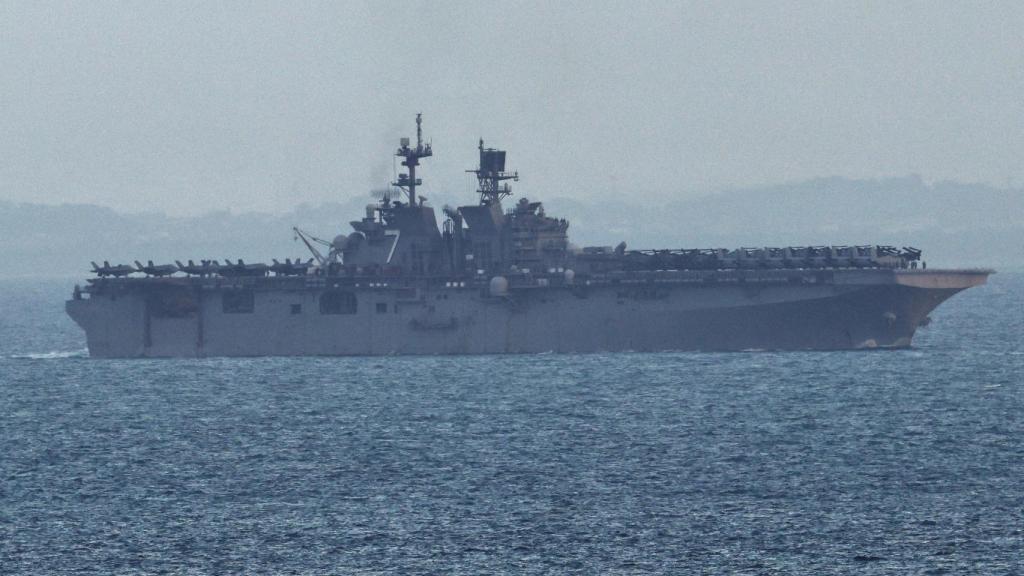
The amphibious assault ship USS Tripoli crosses the Singapore Strait on its way to the Persian Gulf.
Reuters.
It is composed of the assault ship USS Tripolithe cruise USS Robert Smalls and the destroyer USS Rafael Peralta. It carries about 2,500 rapidly deployable troops from the 31st Marine Expeditionary Unit and includes helicopters and F-35B fighters.
The second group left San Diego around March 20. It is formed by the USS Boxerhe USS Comstock and the USS Portland. It sails with 2,200 Marines from the 11th Expeditionary Unit and will arrive in the Gulf in mid-April.
The command of the 81 Aerotransportada It has also been sent to the Gulf. He is accompanied by an infantry brigade and several squadrons of fighter aircraft.
tug of war
The attack plans are deployed in the context of a negotiation plagued by contradictory gestures. President Donald Trump assured this Monday that the US and Iran were holding “very good and productive” talks, while the Persians denied direct contacts with Washington.
On Tuesday, Trump sent Tehran a ceasefire proposal with 15 points. Hours later, Iranian government sources rejected the plan and launched a counterproposal based on the recognition of the sovereignty of Hormuz and the payment of war reparations.
There is no official confirmation that negotiations are taking place between the parties. Pakistan acts as intermediary and there is speculation about the potential mediation of Islamabad Government. Egypt and Türkiye have offered to host a meeting.
The White House Press Secretary, Caroline Leavittwarned Iran this Wednesday that Trump is prepared to hit “harder than ever” if an agreement is not reached. “The president does not joke and is ready to unleash hell,” he threatened.
Iran distrusts Washington’s demonstrations. Despite having rejected the plan of 15 points, Iran maintains its position open to dialogue.
US sources assure that Trump has not yet made a decision. The White House considers that any of the options considered are mere “hypothetical scenarios.” However, they say the president is ready to order an escalation if negotiations do not move forward.
Alternatives remain before the US military sets foot on Iranian soil. Trump could make good on his threat bomb energy facilities of Iran, although it could provoke retaliation against its Gulf partners.
The American president trusts the deterrent effect of the destructive power it is deploying in the Gulf. It needs to unblock the strait to ease pressure on the price of oil and allay fears of a major economic crisis.
Paradoxically, the global economy has become the most fearsome weapon that points Iran towards its enemies. Trump does not want a long war, but his ally Benjamin Netanyahu has no interest in the conflict ending soon. While an exit is being debated in Hormuz, he remains busy clearing out his Hezbollah enemies in southern Lebanon.
Leave a Reply