
To consider the appearance, the decisive variable in the conflict with Iran is not the military. It’s logistics.
The Gulf energy system has operated with unprecedented redundancy since the Iran-Iraq war; electricity Commercial traffic on the Ormuz side It is about 95% compared to normal levels, while the first maritime security measures and the petrol fleet have quadrupled or more on some key energy routes.
A limited combination of naval warfare, electronic interference (with over 1,100 holes affected on GPS spoofing, forgery GPS signal, in the first days of the conflict) and a partial download secured covertransformed the world’s main source of energy in an operationally uncertain area.
For Tehran, resistance represents a form of strategic victory and over time works in its favor.
Therefore, more than the result in production is about oa shock energy connectivity. This change completely changes the economic reading of the war.
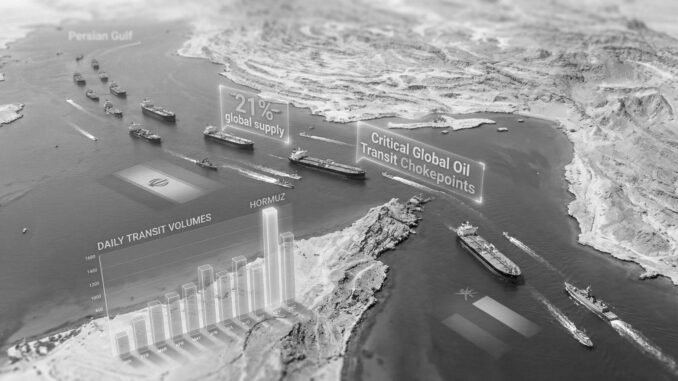
Iran produces alrededor de 3.5 million barrels of crude logs, but the actual critical point is about one fifth volume of world oil and LNG depends on transit through Hormuz.
Modern energy markets function more like global logistics systems than simple mining systems. When navigation becomes predictable or unpredictable, the system will continue before losing the offer.
En terminos de strategic energy intelligenceWe know that systemic crises rarely start with a production crisis until they start when important logistics partners become fairy tales.
The strategic logic is not aimed at the destruction of the regional energy system, but rather at the gradual deterioration of its operational reliability and the initiation of an open regional war.
This type of dynamic has historically emerged with energy crises in the Persian Gulf or West Africa.
This emphasis contrasts with much of the prevailing economic analysis in Europe, which continues to assess this crisis primarily in terms of the duration of the conflict and its impact on energy prices.
This model is useful when supply disruption is an issue. But it is less accurate when there is a critical variable reliability of logistics equipment which supports the global energy system.
In this scenario, the risk does not first appear in production or prices until it is loss of operational continuity of the system. It is no coincidence that institutions like el Bank of Spain We have recently highlighted the need to integrate geopolitical analysis into economic forecasting.
Operational data indicate that the crisis has entered a different phase. Since the confrontation began, Iran has launched more than 500 ballistic missiles and more than 2,000 drones, while attacking energy infrastructure They feature critical installations like this one Ras Laffan en Catarrh (accounts for 20% of global LNG) y refineries en el Bay.
The strategic logic is not aimed at the destruction of the regional energy system, but rather at the gradual deterioration of its operational reliability and the initiation of an open regional war.
This type of pressure corresponds to what is called strategic intelligence prolonged strategic pressure: a situation where critical infrastructure does not collapse, but there is constant uncertainty that changes security, logistics, finance and market behavior.
The crucial question for companies and institutions is how long this logistical friction can be sustained without changing economic and structural decisions.
Our reading is that the most likely scenario is not a short disruption, but rather a sustained pressure phase for several monthsin which the energy system will continue to operate, but with levels raised from uncertainty operating.
The strategic logic of the conflict points to objectives that can hardly be resolved in a few weeks: Israel seeks to permanently reduce Iran’s rearmament capacity (and, if possible, dismantle the regime that supports it), while Washington the credibility of your position is directly at stake.
Paragraph Tehranin exchange resisting them is a form of strategic victory, and time is on your side. Therefore, none of the actors has an incentive to formally de-escalate, as this would mean admitting that the political coast has been raised.
As energy prices remain tight, political pressure on Washington will increase from distinct fronts. In these types of scenarios, umbral vapor is critical energy, industrial and financial companies usually located inside two and six months continued disruption of logistics.
Por ace, par Europe (and especially for industrial economies such as Spain) the critical variable is not the military intensity of the conflict but the operational duration of the logistical disruption.
They generate weekly energy crises volatility; which are extended by several months cancellation decisions, regulatory architecture and industrial strategy. As energy transport becomes more stable, the costs of security, inventory and financing are gradually transferred to the entire industrial chain.
Energy, industrial and financial companies should comply three critical signals in the next few weeks: one, reopening secured cover for transportation through Hormuz, two, stable repairs transit petroleros and three, their evolution international markets LNG.
These indicators will determine whether real disruption and temporary volatility or the beginning of a structural reconfiguration of the global energy system.
If Hormuz is to act as a faithful correspondent, the conflict will become a regional crisis and an inflection point for the global energy system; and for European energy security.
***José Parejo is the founder and CEO of Jose Parejo & Associates (JPA), an international strategic intelligence firm that advises institutions and companies on geopolitical analysis, political risk and decision-making in complex economic and regulatory environments. ***
Leave a Reply