
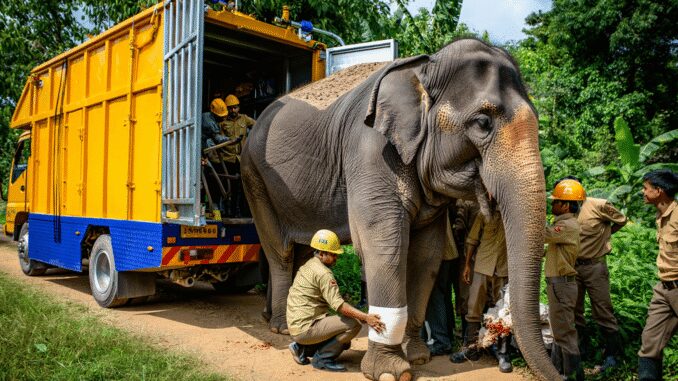
A conservation team in India launched a vehicle designed for an unusual task: transporting injured elephants long distances with veterinary safety. The debut of the new specialized transport occurred in late February, when a 27-year-old female with a paw injury was evacuated from a rural area to a care center in Uttar Pradesh.
The organization behind the operation, Wildlife SOSdesigned this ambulance truck to reduce risks to both animals and staff during transfers that were previously logistically complex and dangerous.
Veeras the rescued specimen was baptized, had spent much of its life carrying out work and wandering activities. Upon arrival, the medical team performed a full evaluation, administered initial treatment, and decided that transfer was necessary to receive specialized care.
How the transport is equipped
The vehicle incorporates specific solutions for a large and heavy animal, designed to stabilize it for hours on the road and allow continuous medical surveillance without exposing anyone to direct risk.
- Side access and protected windows facilitate medication administration and remote monitoring of vital signs.
- Harness and strap systems that allow the load to be redistributed and relieve pressure on injured extremities.
- Reinforced interior designed to reduce vibration and stress during travel.
- Protocols for frequent stops so that the animal can rest or lie down under veterinary supervision.
During the transfer, the staff made periodic stops to allow the animal to regain strength; Unlike other vehicles, in this truck the elephants remain standing for safety, but the supports inside help relieve pain in the affected limb.
Destination and specialized care
The trip concluded in Elephant Hospital of the Elephant Conservation and Care Center in Mathura – a facility that houses more than 30 rescued specimens – where the animals receive continuous care, adequate food and welfare measures for their recovery.
The head of the American subsidiary of the organization explained that having this type of units reduces response times and minimizes risks during long evacuations, which expands the NGO’s capacity to act in emergencies.
In addition to surgical interventions and conventional treatments, the center has incorporated complementary therapies. The team has documented improvements in elephants treated with acupuncture techniques, a traditional practice they have adapted to relieve chronic pain linked to overexertion.
A Wildlife SOS staff member said the combination of new resources and clinical expertise has led to the recovery of animals that, in the past, would have had few effective treatment options.
In practical terms, the arrival of the truck represents an evolution in logistical capacity for conservation and care: it allows heavy animals to be moved faster, safer and with less stress, which has a direct impact on the possibilities of medical recovery.
The operation also highlights the dependence of these organizations on support and funds to maintain specialized units and treatment centers, as well as to maintain transfer protocols that require trained personnel and adapted material.
The rescue at the end of February not only demonstrated the usefulness of the new equipment, but also opens the door to more frequent and safer interventions in rural areas where access to veterinary care for megafauna is limited.
Similar items

Alonso Delgado covers the international news with rigor. You’ll find accurate and relevant reporting on major global events, from political crises to diplomatic breakthroughs.
Leave a Reply