
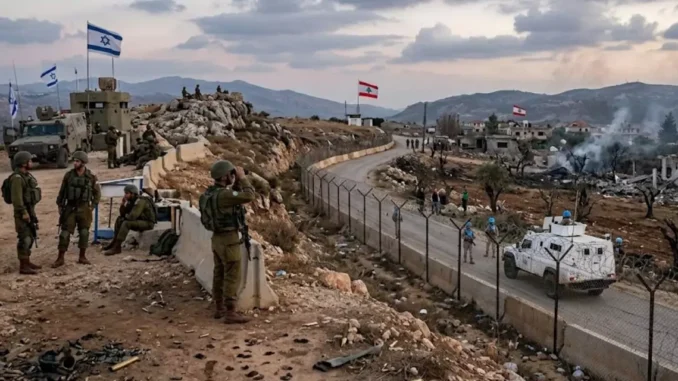
After more than six weeks of clashes, Israel and Lebanon agreed to a temporary ceasefire promoted by the mediation of the United States, in an attempt to stop the escalation of violence in the region.
The announcement was made by President Donald Trump, who assured that both parties will begin a ten-day truce starting this Thursday afternoon.
AGREEMENT PUSHED FROM WASHINGTON
According to the US president, the pact was reached after conversations with Lebanese President Joseph Aoun and Israeli Prime Minister Benjamin Netanyahu.
The cessation of hostilities contemplates an immediate pause in attacks. Meanwhile, American diplomats, led by Marco Rubio and JD Vance, will seek to lay the foundations for a more lasting agreement.
Although the announcement was presented as a significant advance, Trump himself framed it in a political narrative by stating that it would be the “tenth war” that he has managed to stop.
A REGION MARKED BY RECENT VIOLENCE
The conflict intensified in early March, when the Israeli army resumed attacks in southern Lebanon in its offensive against Hezbollah.
The bombings left thousands of victims and caused massive displacement, worsening a humanitarian crisis in the border area. From Israel, the creation of a “security zone” was even proposed, accompanied by measures that would prevent the return of hundreds of thousands of civilians.
CONFRONTING POSTURES AND DISTRUST
While the Lebanese government expressed willingness to stop the violence and prevent further destruction, Hezbollah openly rejected the agreement.
Representatives of the group assured that they do not consider themselves obliged to respect any agreement derived from negotiations between Beirut and Tel Aviv, which calls into question the real effectiveness of the truce.
A PEACE STILL FAR AWAY
Although the ceasefire represents a pause in hostilities, factors that threaten its viability remain: the lack of internal consensus in Lebanon, Israel’s military objectives and the absence of clear guarantees for the civilian population.
The agreement also occurs in a historical context of conflict between both countries that dates back to 1948. This reinforces the perception that it is more of a temporary respite than a definitive solution.
Leave a Reply