
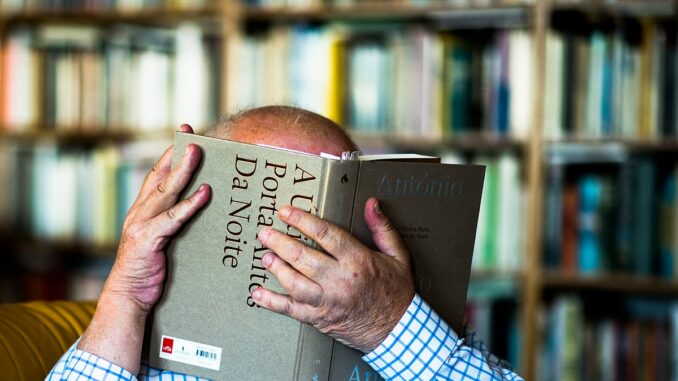
“Everything in the biography of António Lobo Antunes was capital, cyclopean, colossal. It is also his death”.This is how the Spanish daily The Country describes the disappearance of the Portuguese writer, this Wednesday (March 5). Like the loss of a monumental figure.
The death of António Lobo Antunes, at the age of 83, had wide repercussions in the international press, which remembers him as one of the greatest figures in contemporary Portuguese literature and an author whose work had a decisive impact on European fiction in recent decades.
O The Country adds that the void left by the author, “the colossus of Portuguese literature who best explored the traumas of history”, constitutes “one of those black holes” in contemporary literature, remembering that he published more than three dozen novels, chronicles and essays throughout an intense career.
The Spanish publication also highlights the complex relationship between Lobo Antunes and the Nobel Prize for Literature, which he never received despite having repeatedly appeared among the candidates. In this context, it also evokes the rivalry frequently mentioned between the author and José Saramago, the two most prominent names in Portuguese literature after the 25th of April, and notes that this opposition was often fueled as a kind of literary duel in Lisbon, “similar to what Benfica and Sporting fans experience, as if admiration for one prevented that of the other”.
Also the The Worldin Spain, recalls the writer’s irreverent attitude towards literary awards. In an interview cited by the newspaper, Lobo Antunes bluntly stated: “I don’t give a damn about the Nobel Prize. Awards don’t make books betterThe Spanish daily describes him as “the last guerrilla of Portuguese literature” and as the last representative of a generation that included authors such as José Saramago, José Cardoso Pires or Sophia de Mello Breyner.
In France, the Liberation highlights the writer’s international projection, remembering that he was “one of the most read and most translated Portuguese-speaking authors in the world” and a name often associated with the Nobel Prize. The newspaper describes him as a disenchanted chronicler of contemporary Portuguese society, whose work mixes romance, poetry and autobiography in a “baroque and metaphorical” style.
The same publication also recalls the biographical trajectory that profoundly marked his literature. Born in 1942 into a family from the great bourgeoisie of Lisbon, Lobo Antunes was sent to Angola in the early 1970s as a military doctor, an experience that would decisively mark his writing. After returning to Portugal, he practiced psychiatry in Lisbon before dedicating himself entirely to literature from the mid-1980s.
Still in France, the The World highlights the demanding and radical nature of his writing, remembering that the author himself rejected the idea of writing to please the public. In a chronicle published in 2012, cited by the newspaper, he stated: “I didn’t write to bring peace to anyone. He saw no interest in amusing or entertaining. I made books for adults who stand up straight, eyes wide open”.
In Italy, the La Republica speaks of farewell to a “singer of free Portugal” who was, along with Saramago, “the most authoritative literary voice of his country”.
Not Brazil, The Globe also highlights the international dimension of the writer, describing him as “one of the most read and translated Portuguese authors in the world”, with work widely recognized and distinguished, among other awards, with the Camões in 2007.
Leave a Reply