
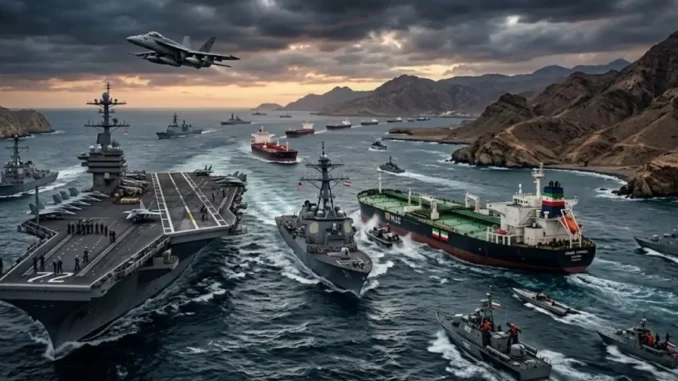
The reopening of the strategic Strait of Hormuz marks a momentary turn in one of the most tense areas of global energy trade. The measure, announced by Iranian Foreign Minister Abbas Araghchi, comes after the ceasefire agreement between Israel and Lebanon, but does not completely dispel the uncertainties in the region.
CONDITIONAL OPENING AND POLITICAL MESSAGE
The Iranian government confirmed that it will allow the transit of commercial ships during the period of the truce, established for ten days. The decision not only responds to a logistical need, but also functions as a political gesture in a context of international pressure.
Tehran directly linked this opening to the cessation of hostilities in Lebanon, underlining that its position has been insistent in favor of a broader regional ceasefire. However, the temporary nature of the announcement makes it clear that the stability of the maritime corridor depends on still volatile factors.
A KEY STEP FOR THE ENERGY MARKET
The Strait of Hormuz is a critical artery of world trade: nearly 20% of the oil and gas distributed globally circulates through its waters. Its partial closure in recent days, after the increase in tensions between Iran, the United States and Israel, raised alerts in international markets.
The reopening represents an immediate respite for supply chains, although analysts warn that the risk has not disappeared. The global dependence on this maritime passage keeps the international economy exposed to any escalation.
FROM ESCALATION TO CEASE FIRE
The agreement between Israel and Lebanon, announced in Washington, ended – at least temporarily – more than six weeks of fighting. The truce, promoted by US diplomacy, opens a limited window to reduce tensions, but does not resolve the underlying causes of the conflict.
In parallel, previous actions by the United States, such as the blockade of maritime traffic linked to Iranian ports, intensified the scenario. Iran’s response, restricting the passage through Hormuz, demonstrated the strategic weight of the strait as a tool of pressure.
REACTIONS AND READINGS FOUND
US President Donald Trump welcomed the Iranian decision, interpreting it as a positive development. However, recent dynamics raise questions about the coherence of the strategies applied by Washington and their effects on allies and markets.
For some analysts, the measures of economic and military pressure could have contributed to an unnecessary escalation, even affecting Western interests. Others consider that the reopening demonstrates the effectiveness of these actions.
AN UNCERTAIN CALM
Although maritime traffic is normalizing for now, the balance remains precarious. The possibility that the conflict will be reactivated or that new sanctions and blockades will come into play keeps the international community on alert.
The Strait of Hormuz is operating again, but under the shadow of a limited truce and tensions that, far from being resolved, have barely been contained.
Leave a Reply