
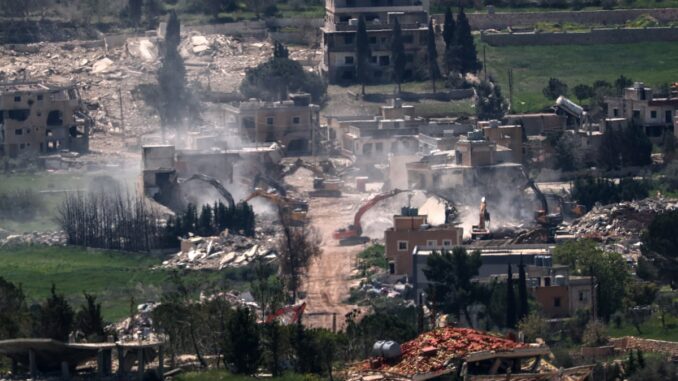
Washington is discussing the possibility of new negotiations with Tehran, declaring itself optimistic about an agreement, following the Iranian threat to block circulation in the Red Sea in response to the blockade of the Persian country’s ports.
Iran reaffirmed its will to continue negotiating, while the world awaits the extension of the ceasefire, in force since April 8, and the end of a war that caused thousands of deaths, mainly in Iran and Lebanon, while shaking the world economy.
Discussions are taking place with a view to resuming negotiations in Islamabad, the capital of Pakistan, “but nothing is official” yet, the White House spokeswoman declared on Wednesday.
“But we are optimistic about the prospect of an agreement”added Karoline Leavitt, after the failure of a first round of negotiations, also in Islamabad, on Sunday.
The influential Pakistani army chief, Asim Munir, was received in Iran on Wednesday by Iranian Foreign Minister Abbas Araghchi.
Tehran’s diplomatic spokesman, Esmail Baghai, stated that “several messages had been exchanged through Pakistan” in the last three days.
However, he remained firm on a fundamental demand from Iran: the right to civil nuclear energy cannot be “withdrawn under pressure or through war”, he said, only opening the door to debates on “the level and type of enrichment” of uranium.
The objectives of Israel and the United States in relation to Iran “are identical”, assured Israeli Prime Minister Benjamin Netanyahu, referring in particular to the “abandonment of enrichment capacity within Iran”.
On the ground, Tehran continues to block the Strait of Hormuz and Washington has imposed, since Monday, a blockade on ships coming from or going to Iranian ports.
The US military announced on Wednesday that it had prevented ten ships from leaving Iranian ports.
“American forces have completely paralyzed maritime commerce” of Iran, said the head of US forces in the region. Brad Cooper highlighted that around 90% of the Iranian economy depends on maritime trade.
If the United States “creates insecurity for Iran’s commercial ships and oil tankers”, this will constitute “the prelude” to a violation of the ceasefire, retorted the head of the command of the Iranian armed forces, General Ali Abdollahi.
Iran will not allow “any exports or imports into the Persian Gulf, the Sea of Oman or the Red Sea,” he added, without specifying what form the Red Sea blockade would take.
In turn, Iranian Supreme Leader Mohsen Rezaei’s adviser threatened to sink US ships if they tried to play “police” in the strait.
“Your ships will be sunk by our first missiles and this represents a danger to the American military”threatened Rezaei, on Iranian television.
Finance ministers from 11 countries, including the United Kingdom, Japan and Australia, called for a “negotiated resolution” of the conflict, citing threats “to global energy security, supply chains, as well as economic and financial stability.”
The New York Stock Exchange ended higher on Wednesday, with the S&P 500 and Nasdaq Composite indexes hitting new records, as investors bet on continued US-Iran talks.
Lusa
Leave a Reply