
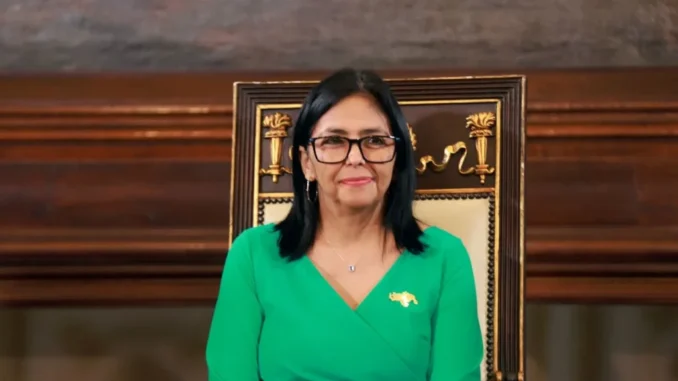
In Venezuela, the official campaign demands the return of Nicolás Maduro and Cilia Flores, detained in New York after the US military operation on January 3. Billboards with the slogan “We want you back” and messages in state media support a narrative of rejection of foreign intervention.
Venezuela and its internal situation
In that sense, the Armed Forces have declared themselves “revolutionary, socialist, anti-imperialist and deeply Chavista,” in support of the acting president, Delcy Rodríguez.
You may also be interested in: China inaugurates the Year of the Horse with AI and robots
In parallel, the interim government has undertaken a reform agenda that modifies central structures of Chavismo and reconfigures the relationship with the United States. Rodríguez, who assumed power after the capture of Hugo Chávez’s successor, is promoting a reform of the oil legislation, an amnesty law whose vote is expected in the
coming days, release of political prisoners and ministerial changes.
The official Venezuelan gazette dated February 9 formalized the elimination of seven state programs and organizations, including the Strategic Center for Security and Protection of the Homeland (Cesppa), created in 2013, as well as several social “missions” established during the governments of Chávez and Maduro. Part of its functions will be
reassigned to other units monitored by Rodríguez.
The visit of the Secretary of Energy of the United States, Chris Wright, and the statements of the US President, Donald Trump – who stated that Rodríguez does “a great job” – show an active channel of dialogue between both governments, despite the fact that diplomatic relations have been broken since 2019.
They seek resolutions
Analysts consulted by the AFP agency point out that the Executive seeks to preserve the
internal cohesion while negotiating favorable external conditions. The political scientist Colette
Capriles maintains that the interim office needs to “project continuity with the Chavista legacy.”
to avoid fractures at its base.”
Also, sociologist Antulio Rosales points out that economic opening and the eventual relaxation of sanctions are part of “a strategy aimed at stabilizing the economy and consolidating governability.”
Finally, the demand for the return of the Chavista autocrat operates as an element of political mobilization, although specialists consider his immediate restitution unlikely. While public discourse maintains references to anti-imperialism, institutional management advances in agreements and reforms that reorganize the internal balance and the relationship with Washington
Leave a Reply