
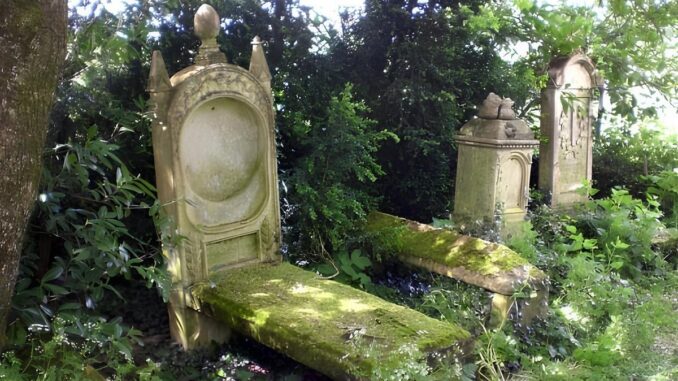
The wars of religion have long left their mark in the village of Lacrouzette (Tarn). In 1633, the refusal of a priest to bury a Protestant child set fire to the burial ceremony and led the village to dig another cemetery.
In the village of Lacrouzette, the Wars of Religion have officially ended, but the confessional wounds still bleed. The death of a child will be enough to reopen the wounds and divide even the dead.
In this month of April 1633, Jean Saubac, Protestant, lost his son Jacques. He wants to bury him where his ancestors sleep, in the parish cemetery of Notre-Dame, and sends Pierre Bonet to dig the grave there. But Master George Chasottes, rector of the parish, appears and blocks the road. This ground is Catholic, these stones are Catholic, and heretics no longer have their place there. Bonet replies, without being discouraged, that Saubac, Pastor François Rigail and the whole village ordered him to act in this way, and that the priest would do better to get out of the way. The pit is completed.
Then comes the funeral procession. Almost all of Lacrouzette, the village has a Protestant majority, stood up to accompany the small body, supervised by two ministers. Opposite, on the threshold of the cemetery, only two men: Chasottes and his clerk, white surplice and raised cross. The disproportion is striking. However, the priest does not back down an inch.
The force was on the opposing side
He asks what they are doing there. The ministers replied that they wanted to bury this child in the tomb of his fathers. Chasottes clean slice. Since they abandoned the Church, they no longer have any rights or share in this place. That the day they returned to the Catholic fold, the Church, like a good mother, would gladly reopen this land to them. Not before.
Threats and whispers rise. Chasottes himself recognizes it in his register, the force was on the opposing side. Only the presence of his clerk, who, he wrote with almost comical gravity, would have avenged any affront against his person, caused the crowd to hesitate. Finally, the procession withdraws, taking the dead child.
That same day, the Protestants of Lacrouzette began to dig their own cemetery, to the west of the first, in the land that no one disputed with them. None of them was ever buried at Notre-Dame again.
Twenty-four years later, in January 1657, Chasottes noted with barely concealed satisfaction that the Huguenots had finally enclosed their cemetery with walls.
All it took was a dead child and a priest alone with his cross to teach the living of Lacrouzette that, from now on, we would no longer share anything, not even the silence of the dead.
Leave a Reply